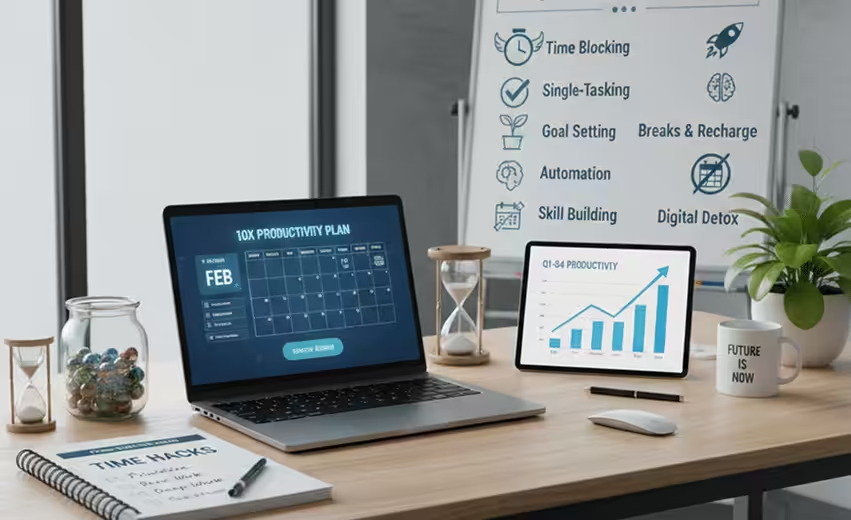
10 Time Management Tips to Skyrocket Productivity in 2026

Ever feel like your workday ends before your most important tasks even begin? In a workplace filled with meetings, notifications and constant context switching, managing time effectively has become one of the most valuable professional skills.
Strong time management tips help people work smarter, reduce stress and stay balanced, especially when they’re supported by clear insights and accurate data. That’s why workforce intelligent time tracking software is becoming essential for modern teams, offering real insight into how time is spent and where productivity can improve.
In this blog, we’ll explore:
Overview
You’ll also see how Desklog’s productivity features help turn these time management strategies into consistent, measurable habits.
What is Time Management Tips?
Time management tips are the practice of planning and organizing how time is used across different activities to work more effectively and productively. It helps individuals achieve their goals while maintaining balance between work and personal life, reducing stress and avoiding last-minute pressure.
Strong time management tips involves prioritizing tasks, setting realistic goals, scheduling wisely and minimizing distractions to ensure important work is completed on time.
10 Proven Time Management Tips to Improve Productivity
1. Prioritize with Purpose
Not all tasks deserve the same level of attention. Effective task prioritization helps you focus on high-impact work instead of reacting to everything that feels urgent. One of the most reliable time management techniques is separating tasks based on urgency and importance, often using frameworks like the Eisenhower Matrix. This ensures strategic tasks don’t get buried under low-value work.
How Desklog helps:
Desklog’s Project Time Tracking gives you visibility into where your time is actually going. By reviewing time spent across projects, you can prioritize tasks that align with business goals instead of assumptions.
2. Break Tasks into Actionable Steps
Large tasks can feel overwhelming, leading to procrastination or rushed execution. Breaking work into smaller, actionable steps makes progress more achievable and measurable.
Clear subtasks increase accountability and minimize mental overload, making them essential to effective time management skills.
How Desklog helps:
With Desklog’s task and project structuring features, teams can divide work into manageable subtasks, track progress visually and maintain clarity throughout the project lifecycle.
3. Use Time-Blocking and Focus Periods
Time-blocking is one of the most effective time management tips for reducing context switching. By assigning specific blocks of time to focused work, meetings, or admin tasks, you regain control of your day.
Batching similar tasks together also minimizes distractions and improves concentration.
How Desklog helps:
Desklog’s automatic time tracking runs in the background, capturing how long you spend on focused work sessions. This makes it easier to design realistic time blocks based on actual working patterns.
4. Try the Pomodoro Technique
The Pomodoro Technique encourages working in short, focused bursts followed by brief breaks, helping maintain concentration while preventing burnout.
This is one of the most popular time management tips, especially for knowledge workers who struggle with sustained focus.
How Desklog helps:
Desklog’s activity tracking allows you to track productive work intervals and identify when focus dips. Over time, this data helps you structure Pomodoro sessions more effectively.
5. Set Realistic Time Limits
When tasks don’t have clear time boundaries, they tend to expand unnecessarily. This is a concept known as Parkinson’s Law. Setting realistic limits creates urgency and prevents overworking.
Comparing estimated time with actual time spent is a powerful way to refine your time management techniques.
How Desklog helps:
Desklog’s automated timesheets and reports show actual task durations, allowing teams to set smarter deadlines and improve future planning accuracy.
6. Eliminate Distractions
Distractions are productivity killers. Notifications, unnecessary meetings and digital noise can fragment attention and drain energy throughout the day.
Reducing interruptions is one of the most impactful time management strategies for sustained focus.
How Desklog helps:
Desklog’s app and URL tracking highlights unproductive activities and distraction patterns. With this insight, teams can take targeted steps to minimize time leaks.
7. Use Tools and Automation
Modern productivity depends heavily on the right tools. Automation reduces repetitive work, while integrated systems improve workflow efficiency. Using tools wisely is an essential part of developing advanced time management skills.
How Desklog helps:
Desklog automates time tracking, task logging and reporting, removing manual effort and allowing teams to focus on meaningful work instead of administration.
8. Delegate and Learn to Say No
Trying to do everything yourself leads to overload and burnout. Delegation ensures work is distributed efficiently, while saying no protects your time for high-value tasks. This is one of the most overlooked but powerful time management tip.
How Desklog helps:
Desklog’s project insights and workload visibility help managers identify capacity gaps, delegate tasks effectively and balance workloads across teams.
9. Review and Refine Your Approach
Time management isn’t a one-time setup; it’s an ongoing process. Regular reviews help identify inefficiencies and improve decision-making. Conducting weekly or monthly time audits strengthens long-term time management strategies.
How Desklog helps:
Desklog’s detailed productivity reports and employee insights make it easy to analyze trends, analyse employee productivity and continuously refine workflows.
10. Take Scheduled Breaks for Well-Being
Productivity isn’t about working nonstop. Regular breaks support creativity, mental clarity and sustained performance. Balanced routines are essential for long-term time management skills and employee well-being.
How Desklog helps:
Desklog’s wellness-focused tracking and timed breaks encourage healthier work patterns, helping teams avoid burnout while staying productive.
Time Management Tips vs. Strategies
Although the terms are often used interchangeably, time management tips and time management strategies serve different purposes. Understanding this distinction helps professionals build stronger, more sustainable productivity habits.
What Are Time Management Tips?
Time management tips are the tactical actions applied to daily work. They focus on how tasks are completed within a given timeframe.
Common techniques include:
- The Pomodoro Technique
- Time-blocking
- Task batching
These methods help improve focus, reduce mental fatigue and make individual tasks easier to start and complete.
What Are Time Management Strategies?
Time management strategies are long-term systems that guide how time is planned, reviewed and optimized over weeks or months. They focus on why and what you work on.
Common strategies include:
- Prioritization
- Delegation
- Automation
- Regular review cycles
These strategies ensure your time aligns with broader goals instead of being consumed by day-to-day tasks.
Why You Need Both
Both techniques and strategies play a critical role in effective time management. Time management Tips help you stay productive in the moment, while strategies ensure your productivity efforts remain consistent over time.
Using them together creates a balanced approach that supports both immediate efficiency and long-term success.
Quick Checklist: Daily Time Management Best Practices
Use this checklist to build strong time management skills and apply practical time management tips consistently throughout your workday.

Focus on the tasks that create the most impact instead of reacting to everything.
Spend 5 minutes outlining tasks to avoid decision fatigue later.
Schedule uninterrupted time for deep work and complex tasks.
Group emails, meetings and admin work to reduce context switching.
Silence notifications, close unused tabs and avoid multitasking.
Prevent tasks from expanding by defining clear start and end times.
Use time tracking to understand where your time truly goes.
Step away regularly to maintain energy and mental clarity.
Identify what worked, what didn’t and what needs adjustment.
End your workday with clarity, not unfinished planning.
Conclusion
Effective time management starts with doing the right tasks at the right time in the right way. By following practical time management tips like prioritizing your work, time blocking, and reviewing your progress regularly, you can stay focused, reduce stress, and achieve better results without feeling overwhelmed.
In this blog, we explored the meaning of time management, shared 10 practical time management tips, clarified the difference between techniques and strategies, and introduced a daily checklist to turn plans into action, showing how consistent habits supported by data can drive lasting productivity. With workforce intelligence time tracking software like Desklog, teams gain clear visibility into how time is spent, reduce inefficiencies, and turn productivity efforts into measurable results.
FAQ
Meet The Author