




10 Hubstaff Alternatives to Improve Workforce Productivity in 2026


Many teams start with Hubstaff for time tracking, but over time its limitations become harder to ignore. Restricted flexibility, complicated payroll workflows, and higher costs often push businesses to look for better options.
As a result, demand is growing for time tracking software alternatives that deliver smoother usability, stronger insights, and better value.
In this guide, we compare the best Hubstaff alternatives across four essentials, ease of use, time management, analytics, and cost efficiency, to help you choose the right fit for your team.
What Is Hubstaff?
Hubstaff is a time tracking and workforce management tool launched in 2012 to help businesses monitor productivity and streamline daily operations. Designed for teams of all sizes, Hubstaff combines time tracking, activity monitoring, and basic project management features within a user-friendly interface.
The platform supports automatic time tracking across desktop and mobile devices, enabling employees to record work hours with minimal effort. By delivering detailed insights into how time is spent across tasks and projects, Hubstaff helps organizations uncover inefficiencies, improve resource allocation, and gain better visibility into team performance.
Core Capabilities of Hubstaff
Track Employee Work Hours
Hubstaff offers both manual and automatic time tracking, allowing employees to log hours against specific tasks or projects based on organizational preferences.
Monitor Activity Levels
The software tracks application and website usage, giving managers visibility into employee activity patterns and time utilization during work hours.
Manage Projects and Tasks
Hubstaff integrates with popular project management tools, enabling managers to assign tasks, track progress, and manage deadlines more effectively.
Generate Productivity Reports
Detailed reports provide insights into employee activity, project timelines, and overall productivity, helping teams make data-driven decisions.
Why Consider Hubstaff Alternatives in 2026?
Although Hubstaff is a well-known solution, evolving workplace expectations and user feedback suggest that it may not be the best fit for every organization in 2026. Several limitations encourage businesses to explore more flexible alternatives.
Privacy Concerns
Despite offering screenshot privacy controls, Hubstaff’s activity monitoring features can feel intrusive to employees when not clearly communicated. This perception of constant surveillance may negatively affect trust, morale, and long-term engagement.
Limited Free Plan
Hubstaff’s free plan supports only a single user, making it impractical for most teams. Essential features such as project management tools, payroll integrations, and advanced reporting are locked behind paid plans.
Customer Support Challenges
Some users report delays or inconsistent responses from customer support, which can be disruptive for businesses that rely on time tracking software for day-to-day operations.
Integration Limitations
Hubstaff does not always integrate smoothly with all payroll or project management platforms. This can create operational friction for teams using multiple tools.
What User Reviews Reveal
Feedback from GetApp, a leading software review platform, highlights several recurring issues that impact the overall Hubstaff experience:
Repetitive Manual Entry
Users note the absence of reusable templates for minimum work hours, forcing repetitive manual data entry and reducing efficiency.
System Stability Issues
Login-related crashes are frequently mentioned in reviews, interrupting workflows and raising concerns about reliability and data integrity.
Report Download Problems
Many reviewers report errors while downloading reports, making it difficult to access or share critical time tracking data.
Time Tracking Inconsistencies
Discrepancies between employee and admin views of logged hours are a common complaint, leading to inaccurate timesheets and trust issues.
These concerns suggest that businesses seeking reliability, transparency, and ease of use may benefit from exploring Hubstaff alternatives.
Why Alternatives May Offer More Value
The time tracking software market continues to evolve, with modern solutions focusing on balance rather than surveillance. Many Hubstaff alternatives now offer:

A stronger emphasis on employee engagement and wellbeing
Cleaner, more intuitive user interfaces
Enhanced privacy-first tracking options
Generous freemium plans with essential features
Faster, more responsive customer support
By evaluating these factors and comparing available tools, organizations can choose a time tracking solution that aligns better with their culture, supports productivity, and creates a healthier work environment in 2024 and beyond.
The Best 10 Hubstaff Alternatives
Here’s a table summarizing popular time tracking software options, rated across user-friendliness, time management, data analytics, cost efficiency, and pricing:
| Software | Key Features | Pricing | Ratings |
|---|---|---|---|

|
Automated Time Tracking, Project Time Tracking, Integrations, Attendance Management, Reporting, Project Billing & Invoicing, Activity Tracking, Leave Management, Profit & Loss Calculator | Free: $0 (Unlimited Users and Projects) Business Plan: $3.50/User/Month Enterprise Plan: $4.8/User/Month |
G2: 4.8/5 Capterra: 4.8/5 |

|
Mobile Time Tracking, Billable Time Management, Reporting Features, Automated Reminders, Idle Time Tracking | Free: Forever Starter: $9/Month/User Enterprise: Custom Pricing |
G2: 4.6/5 Capterra: 4.7/5 |

|
Automatic Time Tracking, Accurate Reporting, Invoicing, Task Management, Cross-Platform Availability | Free: $0 (Up To 10 Users) Plus: $15.9/User/Month Pro: $23.9/User/Month |
G2: 4.5/5 Capterra: 4.7/5 |

|
Automatic Time And Expense Tracking, Project Budgeting, Integration Capabilities | Free Forever Pro: $13.75/Month/User (Billed Monthly) Premium: $17.50/Month/User (Billed Monthly) |
G2: 4.3/5 Capterra: 4.6/5 |

|
Project/Task Management, Timesheets, Detailed Reporting, Mobile/Desktop Apps | Standard: $5.49/Seat/Month Pro: $7.99/Seat/Month Enterprise: $11.99/Seat/Month |
G2: 4.5/5 Capterra: 4.8/5 |

|
Automatic Time Tracking, People Dashboard, Project Management, Customizable Timesheets | Starter: $11/User/Month Premium: $20/User/Month Unlimited: $28/User/Month Enterprise: Custom |
G2: 3.8/5 Capterra: 4.7/5 |

|
GPS Tracking, Screenshots/Chat Monitoring, Web/App Usage Insights, Advanced Reporting | Basic: $6.67/User/Month Standard: $11.67/User/Month Premium: $16.70/User/Month |
G2: 4.4/5 Capterra: 4.5/5 |

|
Project Management, Screenshots, Private Time Option, Pomodoro Timer | Lite: Free (1 User) Pro: $7/User/Month Premium: $10/User/Month Enterprise: $20/User/Month |
G2: 4.5/5 Capterra: 4.6/5 |

|
Remote Employee Monitoring, Project Management, Inactivity Reminders, Pomodoro Timer | Power: $12/User/Month Elite: $7/User/Month |
G2: 4.8/5 Capterra: 4.6/5 |
|
|
Time And Attendance Tracking, Mobile Apps, Timesheets For Payroll, Facial Recognition | Premium: $4.99/User/Month Ultimate: $9.99/User/Month |
G2: 4.7/5 Capterra: 4.9/5 |
Best Hubstaff Alternatives in 2024: Features, Pricing, Pros & Cons
Choosing the right Hubstaff alternative has become increasingly important as businesses prioritize flexibility, privacy, employee wellbeing, and cost efficiency. While Hubstaff remains popular, many modern time tracking tools now offer smarter automation, better pricing models, and more balanced monitoring approaches. Below is a curated list of the top Hubstaff alternatives, reviewed in order, with clear descriptions, pricing, ratings, and well-balanced pros and cons to help you decide confidently.
1. Desklog – The Best Hubstaff Alternative
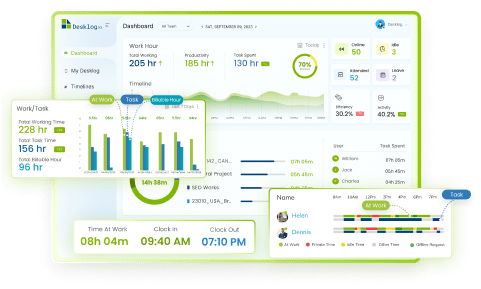
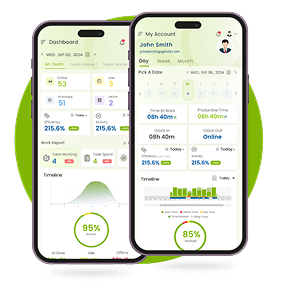
Desklog is a modern workforce intelligence time tracking platform built as a powerful alternative to Hubstaff. It goes beyond basic time monitoring by transforming everyday work data into actionable insights that help teams work smarter, not longer. With fully automated time tracking, Desklog eliminates manual entries, ensures accurate hour logging, and delivers real-time visibility into tasks, productivity trends, and project health.
By capturing work activity automatically, Desklog enables teams to track billable and non-billable, assign tasks, set deadlines, and generate precise project estimates and invoices, all from a single, unified system. Managers gain clarity into how time is spent, where inefficiencies exist, and how resources can be optimized for better outcomes.
Unlike rigid surveillance-based tools, Desklog follows a privacy-first approach. Screenshot capture is optional and enabled only with employee consent, making it suitable for trust-driven teams. Its offline time tracking supports hybrid, remote, and field teams without disrupting workflows.
Desklog also prioritizes sustainable productivity. Built-in attendance management and a dedicated wellness module help prevent burnout, encourage healthy work patterns, and support long-term employee wellbeing. With automated timesheets, built-in invoicing, profit and loss tracking, and performance analytics, Desklog turns raw workforce data into actionable performance insights for smarter operational and financial decisions.
Key Features

Automated Time Tracking
Desklog’s automated time tracking monitors how employees spend their hours; productive, non-productive, or offline. By capturing clock-ins/clock-outs, idle periods, and private time automatically, it gives real-time insights into team work patterns, helping teams stay focused and productive.

Automated Timesheets
Desklog eliminates manual time entry with automated timesheets. Hours worked are captured in the background and converted into accurate, error-free reports, making payroll, billing, and performance evaluations faster, simpler, and highly reliable.

Project Time Tracking
Desklog gives managers full control over project timelines with advanced project time tracking. Assign tasks, set deadlines, and monitor progress through kanban boards and subtask management, ensuring teams stay on track and deliver projects on time.
Project Billing & Invoice
Desklog simplifies project billing with flexible flat-rate or hourly options. Invoices are generated automatically, revenue is tracked in real time, and every transaction is transparent, helping maintain trust with clients and ensuring financial precision.
Project Profit & Loss Calculation
Desklog makes financial oversight easier with project profit & loss analysis. By tracking expenses versus revenue, businesses can monitor costs, evaluate performance, and make informed decisions using detailed profitability insights.
Project Profit & Loss
Desklog makes financial oversight easier with project profit & loss analysis. By tracking expenses versus revenue, businesses can monitor costs, evaluate performance, and make informed decisions using detailed profitability insights.
2. Toggle – Hubstaff Alternative for Simple Time Tracking
Toggl is a lightweight Hubstaff alternative focused on simple and user-friendly time tracking. It is widely used by freelancers and small teams who prioritize ease of use over employee monitoring. Toggl provides clean reports, billable time tracking, and reliable mobile applications. Its minimalist design makes onboarding quick and intuitive. However, it lacks workforce oversight features.
- Free: Forever
- Starter: $9/User/Month
- Enterprise: Custom Pricing
- Clean and intuitive interface allows users to start tracking time instantly.
- Strong reporting features support accurate billing and time analysis.
- Excellent mobile and desktop apps for tracking time across devices.
- Does not offer activity monitoring or productivity tracking features.
- Not suitable for teams requiring attendance or workforce oversight.
3. Paymo – Hubstaff Alternative for Agencies & Client Billing
Paymo is a Hubstaff alternative that combines time tracking with task management and invoicing. It is particularly useful for agencies managing multiple clients and billable projects. Paymo offers detailed reporting and cross-platform accessibility. The platform supports end-to-end project workflows from planning to billing. However, its interface may feel complex for smaller teams.
- Free: $0 (Up to 10 Users)
- Plus: $15.9/User/Month
- Pro: $23.9/User/Month
- Integrated invoicing and billing simplify client payment workflows.
- Project-level tracking improves visibility into timelines and budgets.
- Cross-platform support enables seamless collaboration across teams.
- Interface can feel cluttered for users needing only basic tracking.
- Initial setup and learning curve may slow onboarding for small teams.
4. Harvest – Hubstaff Alternative for Time & Expense Tracking
Harvest is a Hubstaff alternative focused on time tracking and expense management rather than employee monitoring. It is commonly used by consultants and service-based businesses. Harvest excels in budgeting, invoicing, and financial reporting. The platform integrates well with project management tools. However, it offers limited productivity analytics.
- Free: Forever
- Pro: $13.75/User/Month
- Premium: $17.50/User/Month
- Accurate expense tracking and invoicing improve billing efficiency.
- Simple and intuitive interface reduces training time for teams.
- Strong integrations support existing project management workflows.
- No employee activity or productivity monitoring features included.
- Limited workforce management compared to monitoring-based tools.
5. Clockify – Budget-Friendly Hubstaff Alternative
Clockify is a cost-effective Hubstaff alternative offering unlimited users and projects. It focuses on transparent time tracking without employee surveillance. Clockify is popular among startups and budget-conscious teams. It provides reliable reporting and timesheets. Manual timers remain the primary tracking method.
- Standard: $5.49/Seat/Month
- Pro: $7.99/Seat/Month
- Enterprise: $11.99/Seat/Month
- Affordable pricing supports unlimited users and projects.
- Easy setup allows teams to start tracking time quickly.
- Detailed reports help maintain transparency across teams.
- Relies heavily on manual timers for time entry.
- Lacks automated productivity and activity tracking features.
6. Timely – AI-Based Hubstaff Alternative
Timely is an AI-powered Hubstaff alternative that automatically tracks work without manual timers. It prioritizes privacy by avoiding screenshots and surveillance. Timely works well for knowledge workers and creative teams. The platform provides clean dashboards for planning and forecasting. Pricing can become costly for large teams.
- Starter: $11/User/Month
- Premium: $20/User/Month
- Unlimited: $28/User/Month
- Enterprise: Custom
- AI-driven time tracking reduces reliance on manual inputs.
- Privacy-first design improves employee comfort and acceptance.
- Clean dashboards support planning and workload visibility.
- Higher pricing makes it less suitable for large teams.
- Limited monitoring controls for compliance-focused organizations.
7. Time Doctor – Hubstaff Alternative for Deep Monitoring
Time Doctor is a Hubstaff alternative built for organizations that require detailed employee monitoring. It includes screenshots, GPS tracking, and web usage analytics. The tool is widely used by remote and outsourced teams. It offers comprehensive productivity reports. However, its monitoring approach may feel intrusive.
- Basic: $6.67/User/Month
- Standard: $11.67/User/Month
- Premium: $16.70/User/Month
- Detailed monitoring provides deep visibility into employee activity.
- GPS and screenshot tracking support remote workforce oversight.
- Advanced reports help analyze productivity and work patterns.
- Monitoring features may raise employee privacy concerns.
- Over-surveillance can negatively impact morale and trust.
Check out Time Doctor alternatives to explore a variety of time tracking software options.
8. DeskTime – Hubstaff Alternative with Productivity Tools
DeskTime is a Hubstaff alternative that combines time tracking with productivity features like Pomodoro timers. It tracks apps, websites, and screenshots while offering private time options. DeskTime is suitable for small to mid-sized teams. The platform is easy to deploy. Advanced project management is limited.
- Lite: Free (1 User)
- Pro: $7/User/Month
- Premium: $10/User/Month
- Enterprise: $20/User/Month
- Pomodoro timer encourages focused work sessions.
- Private time feature supports work-life balance.
- Simple setup allows quick adoption by teams.
- Project management features are relatively basic.
- Limited scalability for large organizations.
9. Apploye – Hubstaff Alternative for Remote Monitoring
Apploye focuses on remote employee monitoring and productivity tracking for distributed teams. It offers screenshots, inactivity alerts, and attendance tracking. Apploye is affordable and easy to use. It suits startups managing remote workers. Reporting depth is moderate.
- Power: $12/User/Month
- Elite: $7/User/Month
- Remote monitoring with screenshots improves accountability.
- Inactivity alerts help identify productivity gaps quickly.
- Affordable pricing supports startups and small teams.
- Limited integrations with third-party tools.
- Reporting and analytics remain fairly basic.

10. Jibble – Hubstaff Alternative for Attendance & Payroll
Jibble is a Hubstaff alternative focused on attendance tracking and payroll-ready timesheets. It includes facial recognition and mobile apps for field employees. Jibble works well for shift-based teams. It prioritizes accuracy in attendance records. Project tracking features are limited.
- Premium: $4.99/User/Month
- Ultimate: $9.99/User/Month
- Facial recognition ensures accurate attendance tracking.
- Mobile apps support field and shift-based employees.
- Payroll-ready timesheets reduce administrative workload.
- Limited project and task management capabilities.
- Not ideal for agencies or client-based workflows.
Choose the Best Hubstaff Alternative for Your Business
Finding the right Hubstaff alternative starts with understanding your business priorities. Factors such as features, usability, pricing, and scalability play a crucial role in selecting the right time tracking solution. While Hubstaff offers solid functionality, its higher pricing can be a concern for many businesses.
This is where Desklog stands out. As a more cost-effective alternative, Desklog delivers robust time tracking and productivity features without adding financial strain. It enables businesses to streamline operations, gain better visibility into work patterns, and improve overall efficiency—all while staying within budget.
Conclusion
Hubstaff is a capable time tracking tool, but it may not be the best fit for every organization. After evaluating multiple Hubstaff alternatives, key considerations remain consistent: feature depth, ease of use, affordability, and scalability. Among the options reviewed, Desklog offers strong overall value, combining comprehensive features with simplicity and competitive pricing—making it a practical choice for growing teams.
Meet The Author

Co-founder and DevOps Manager at Desklog
