




AI Productivity Tools: The Ultimate Guide to Working Smarter in 2026



Modern workplaces are evolving rapidly, and businesses are increasingly relying on AI-powered systems to improve efficiency, reduce repetitive work, and simplify collaboration. From automating workflows to generating content and managing schedules, AI productivity tools are transforming how teams operate.
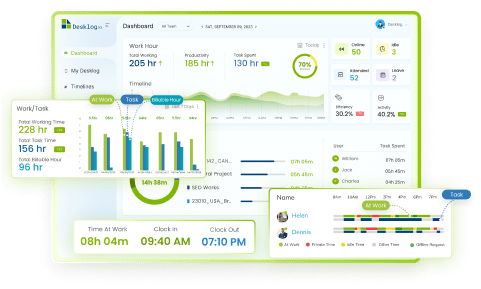
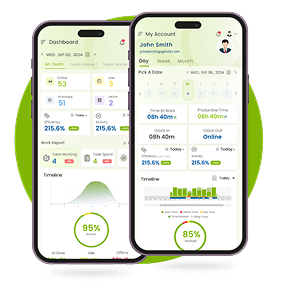
Alongside solutions like productivity tracking software, these intelligent tools help organizations improve time management, optimize performance, and make smarter business decisions with less manual effort.
Table of Contents
- What Are AI Productivity Tools? (Simple Explanation + Use Cases)
- Types of AI Productivity Tools (Category-Based Breakdown)
- Top AI Productivity Tools (Ranked List for 2026)
- AI Productivity Tools Comparison Table (Quick Decision Guide)
- How AI Productivity Tools Improve Work Efficiency
- Pros and Cons of AI Productivity Tools
- How to Choose the Best AI Productivity Tool
- Future of AI Productivity Tools
What Are AI Productivity Tools? (Simple Explanation + Use Cases)
AI productivity tools are software applications powered by artificial intelligence that help individuals and businesses automate time tracking, track projects, organize work, improve communication, and increase overall efficiency. These tools use technologies like machine learning, natural language processing, and predictive analytics to handle repetitive activities and support faster decision-making.
Unlike traditional productivity software, AI tools can understand context, generate content, summarize information, analyze patterns, and even provide recommendations based on user behavior. This allows professionals to spend less time on routine tasks and focus more on strategic and creative work.
AI productivity tools are commonly used for:
- Writing blogs, emails, and reports
- Automating workflows and approvals
- Managing meetings and generating summaries
- Tracking projects and tasks
- Scheduling calendars intelligently
- Conducting research and data analysis
- Assisting developers with coding and debugging
For example, a marketing team can use AI to generate campaign ideas and automate reports, while a remote team may use AI meeting assistants to record discussions and create action items automatically.
Types of AI Productivity Tools (Category-Based Breakdown)
AI productivity tools are available in various categories, each designed to solve specific workplace challenges. Some focus on communication and writing, while others are built for automation, analytics, coding assistance, or project management. Understanding these categories helps businesses choose tools that align with their operational goals.
AI Writing & Content Tools
AI writing tools are among the most widely adopted productivity solutions today. These platforms help users generate, edit, optimize, and refine written content quickly and efficiently. They are commonly used by marketers, bloggers, businesses, students, and customer support teams.
These tools significantly reduce the time required for content creation while improving consistency and writing quality. Instead of spending hours drafting emails, reports, or articles manually, users can generate structured content within minutes.
Key Features of AI Writing Tools
Modern AI writing tools typically include:
- AI blog generation
- Grammar correction
- Tone adjustment
- Email drafting
- SEO optimization
- Content summarization
- Social media caption generation
Some advanced tools can also adapt content based on audience type, writing style, or brand tone, making them highly useful for businesses managing large-scale communication.
Benefits of AI Writing Tools
The biggest advantage of AI writing systems is speed. Businesses can produce more content in less time without sacrificing quality. These tools also help reduce writer’s block, improve grammar accuracy, and maintain consistency across communication channels.
Benefits include:
- Faster content production
- Improved writing quality
- Better communication consistency
- Reduced manual editing
- Enhanced SEO optimization
As digital content demand continues growing, AI writing tools are becoming essential for modern marketing and communication strategies.
AI Task & Workflow Automation Tools
Workflow automation tools use AI to simplify repetitive operational tasks and improve process efficiency. These platforms reduce the need for manual coordination by automating approvals, task assignments, reminders, and workflow execution.
Businesses use these tools to simplify internal operations and improve productivity across departments. Instead of manually managing repetitive activities, organizations can create automated workflows that operate continuously with minimal supervision.
Core Functions of Workflow Automation Tools
AI workflow automation platforms commonly support:
- Task automation
- Smart scheduling
- Workflow triggers
- Automated notifications
- Team collaboration management
- Cross-platform integration
These systems often integrate with project management platforms, communication tools, CRMs, and cloud applications to create seamless operational workflows.
Why Workflow Automation Matters
Manual workflows often slow down business operations and increase the chances of errors. AI automation tools eliminate repetitive administrative tasks and improve consistency in execution.
Major benefits include:
- Faster operational processes
- Reduced human error
- Improved employee accountability
- Better workflow visibility
- Increased operational scalability
For growing businesses, automation becomes especially important because it allows teams to manage larger workloads without significantly increasing staffing requirements.
AI Meeting & Communication Tools
AI communication tools are designed to improve collaboration and simplify meeting management. These systems automatically record conversations, transcribe discussions, summarize key points, and generate action items.
Remote and hybrid teams particularly benefit from these tools because they help maintain communication clarity across distributed work environments.
Features of AI Meeting Tools
Popular AI communication platforms often provide:
- Real-time transcription
- AI-generated summaries
- Speaker recognition
- Action-item extraction
- Automated meeting notes
- Smart scheduling assistance
These capabilities reduce the need for manual note-taking and improve information accessibility for teams.
Business Benefits of AI Communication Tools
Meetings often consume a large portion of employee work hours. AI-powered communication tools help businesses improve meeting productivity by ensuring important information is captured accurately.
Benefits include:
- Reduced documentation workload
- Better meeting accountability
- Improved collaboration
- Easier information retrieval
- Enhanced remote communication efficiency
As businesses continue adopting hybrid work models, AI communication tools are becoming central to modern collaboration strategies.
Reduce Manual Work and Improve Team Productivity!
Combine AI productivity tools with smart employee monitoring and time tracking using Desklog to automate workflows, improve accountability, and optimize daily operations.
Try Desklog FreeTop AI Productivity Tools (Ranked List for 2026)
The AI productivity software market has expanded rapidly over the past few years, with dozens of platforms offering specialized features for automation, writing, collaboration, analytics, and workflow management. However, only a few tools consistently stand out because of their performance, usability, scalability, and industry adoption.
Below are some of the top AI productivity tools businesses and professionals are using in 2026:

#1 ChatGPT (OpenAI)
AI Writing & ResearchChatGPT has become one of the most widely used AI productivity tools across industries. It helps users generate content, automate writing tasks, conduct research, summarize information, and assist with coding and brainstorming activities. Its flexibility makes it suitable for marketers, developers, educators, startups, enterprises, and content creators alike.
Best Use CasesBecause of its conversational interface, users can interact naturally with the system and receive fast, detailed responses.
- Multi-purpose capabilities
- Fast content generation
- Strong contextual understanding
- Suitable for various industries
- Requires clear prompts
- May occasionally generate inaccurate information
- Advanced features often require paid plans
Despite these limitations, ChatGPT remains one of the most influential AI productivity platforms available today.
#2 Notion AI
Documentation & CollaborationNotion AI is an AI-powered workspace platform that combines documentation, project management, collaboration, and workflow organization within a single system. It helps users create content, summarize notes, manage tasks, organize databases, and automate repetitive activities more efficiently.
Best Use CasesBecause of its centralized workspace structure, teams can organize information, collaborate in real time, and automate documentation workflows more efficiently.
- Centralized productivity workspace
- Strong collaboration capabilities
- AI-powered documentation assistance
- Flexible workspace customization
- Efficient project organization
- Suitable for remote teams and businesses
- Learning curve for new users
- Complex interface for large workspaces
- Advanced AI features may require paid plans
- Can become difficult to manage without proper structure
Despite these limitations, Notion AI remains one of the most popular AI productivity platforms for businesses and teams looking to combine collaboration, documentation, and workflow management within a single AI-powered system.

#3 Microsoft Copilot
Office & Enterprise ProductivityMicrosoft Copilot is an AI-powered productivity assistant integrated directly into Microsoft applications such as Word, Excel, Outlook, Teams, and PowerPoint. It helps businesses automate repetitive office tasks, generate reports, analyze spreadsheets, summarize meetings, and improve workplace collaboration.
Best Use CasesBecause of its integration with Microsoft Office applications, employees can automate everyday office operations without switching between multiple tools.
- Deep Microsoft ecosystem integration
- Enterprise-grade security
- Improves office productivity
- Simplifies reporting and analysis
- Strong collaboration support
- Reduces administrative workload
- Works best within Microsoft environments
- Some features require enterprise subscriptions
- Learning curve for advanced AI functions
- Limited flexibility outside Microsoft tools
Despite these limitations, Microsoft Copilot remains one of the leading enterprise AI productivity solutions for organizations seeking intelligent workplace automation.

#4 GrammarlyGO
AI Writing & CommunicationGrammarlyGO is an AI-powered writing and communication assistant designed to improve grammar, tone, clarity, and overall writing quality. In addition to correcting errors, the platform can generate emails, rewrite sentences, suggest responses, and optimize communication for professional environments.
Best Use CasesBecause of its real-time writing support, users can improve communication quality while reducing manual editing time.
- Easy-to-use interface
- Strong grammar correction
- Improves communication clarity
- Real-time writing assistance
- Professional tone optimization
- Useful for business communication
- Primarily focused on writing tasks
- Limited workflow automation features
- Advanced tools require paid plans
- May oversimplify certain writing styles
Despite these limitations, GrammarlyGO remains one of the most effective AI writing assistants for improving workplace communication and content quality.

#5 Jasper AI
Marketing Content GenerationJasper AI is an AI-powered content generation platform designed primarily for marketers, businesses, and content creators. It helps users create blogs, advertisements, landing pages, product descriptions, email campaigns, and SEO-focused content at scale. Its marketing-focused AI capabilities make it suitable for digital marketers, agencies, startups, ecommerce businesses, and content teams managing high-volume content production.
Best Use CasesBecause of its specialized marketing templates and automation capabilities, businesses can produce large amounts of content more efficiently.
- Marketing-focused AI templates
- Fast content generation
- SEO content support
- Brand voice customization
- Scalable content production
- Suitable for digital marketing teams
- Best suited for marketing-related content
- Requires editing for high-quality outputs
- Premium pricing for advanced features
- Less effective for highly technical writing
Despite these limitations, Jasper AI remains one of the most popular AI productivity tools for businesses focused on content marketing and digital growth.

#6 Taskade AI
Workflow & Project ManagementTaskade AI is an AI-powered productivity and workflow management platform designed to help teams automate tasks, organize projects, and collaborate more efficiently. The platform combines task management, AI automation, brainstorming tools, and real-time collaboration within a unified workspace.
Best Use CasesBecause of its collaborative and automation-focused environment, teams can simplify project coordination and reduce repetitive administrative work.
- AI-first productivity platform
- Real-time collaboration features
- Lightweight and flexible interface
- Smart workflow automation
- Suitable for remote teams
- Easy project organization
- Fewer enterprise features compared to larger platforms
- Limited advanced reporting capabilities
- Some automation features require paid plans
- May not suit highly complex enterprise workflows
Despite these limitations, Taskade AI remains a strong AI productivity solution for teams seeking simple, collaborative, and automation-focused workflow management.

#7 Otter.ai
Meeting Transcription & NotesOtter.ai is an AI-powered meeting assistant designed to automate transcription, note-taking, and meeting summaries. It helps businesses and teams capture conversations in real time, organize meeting records, and improve collaboration without relying on manual documentation. Its communication-focused AI capabilities make it suitable for remote teams, business professionals, educators, recruiters, and organizations that conduct frequent virtual meetings.
Best Use CasesBecause of its real-time transcription capabilities, users can focus on discussions without worrying about taking manual notes.
- Accurate real-time transcription
- Automatic meeting summaries
- Easy collaboration and sharing
- Searchable meeting records
- Improves remote communication
- Reduces manual documentation work
- Accuracy may vary with accents or background noise
- Limited advanced project management features
- Premium plans required for extended usage
- Best suited mainly for communication workflows
Despite these limitations, Otter.ai remains one of the most widely used AI productivity tools for improving meeting management and team communication.

#8 Zapier AI
Workflow Automation & IntegrationZapier AI is an AI-powered workflow automation platform that helps businesses connect applications, automate repetitive processes, and simplify operational workflows without requiring coding expertise. The platform supports thousands of app integrations across various industries and business functions. Its automation-focused capabilities make it suitable for operations teams, startups, marketers, ecommerce businesses, and organizations looking to improve process efficiency.
Best Use CasesBecause of its no-code automation structure, businesses can automate operational tasks quickly without depending heavily on development teams.
- Supports thousands of integrations
- Simplifies workflow automation
- No coding knowledge required
- Improves operational efficiency
- Saves time on repetitive tasks
- Scalable automation capabilities
- Complex workflows may require setup time
- Advanced automation features can become expensive
- Heavy automation may need monitoring
- Limited offline functionality
Despite these limitations, Zapier AI remains one of the leading automation platforms for businesses seeking efficient cross-platform workflow management.

#9 Perplexity AI
AI Research & SearchPerplexity AI is an AI-powered research and conversational search platform that helps users find accurate information quickly through natural language interactions. It combines AI-generated responses with web-based information retrieval to simplify research and knowledge discovery. Its research-oriented capabilities make it suitable for students, researchers, professionals, writers, analysts, and businesses that require fast access to summarized information.
Best Use CasesBecause of its conversational search experience, users can gather and understand information faster compared to traditional search methods.
- Fast information retrieval
- AI-generated summaries
- User-friendly conversational interface
- Helpful for research workflows
- Simplifies complex topics
- Reduces time spent searching manually
- Information accuracy depends on sources
- Limited advanced workflow features
- Not designed for task management
- Some advanced features may require subscriptions
Despite these limitations, Perplexity AI remains one of the fastest-growing AI research tools for improving productivity during information gathering and analysis.

#10 Canva AI
AI Design & Visual ContentCanva AI is an AI-powered design and creative productivity platform that helps users generate visual content, presentations, graphics, and marketing materials quickly. It simplifies design workflows through automation and AI-assisted creative tools.
Best Use CasesBecause of its drag-and-drop interface and AI-powered design assistance, users can create high-quality visuals without advanced design expertise.
- Easy-to-use interface
- AI-assisted design generation
- Suitable for beginners and businesses
- Fast creative workflows
- Large template library
- Supports multiple content formats
- Limited advanced professional design controls
- Some premium assets require subscriptions
- Complex projects may need external tools
- AI-generated outputs may require manual refinement
Despite these limitations, Canva AI remains one of the most popular AI productivity tools for simplifying visual content creation and creative workflows.
AI Productivity Tools Comparison Table (Quick Decision Guide)
| Tool | Best For | Key Feature | Suitable Users |
|---|---|---|---|
| ChatGPT | Writing & Research | Multi-purpose AI assistance | Businesses, creators |
| Notion AI | Documentation | Smart knowledge management | Teams & startups |
| Microsoft Copilot | Office Work | Excel & Word automation | Enterprises |
| GrammarlyGO | Writing Improvement | Grammar & tone optimization | Professionals |
| Jasper AI | Marketing Content | SEO-focused writing | Marketers |
| ClickUp AI | Project Management | Workflow automation | Teams |
| Otter.ai | Meetings | AI transcription | Remote teams |
| Zapier AI | Automation | Cross-app workflows | Businesses |
| Perplexity AI | Research | Conversational search | Students & researchers |
| Canva AI | Design | AI-powered visuals | Creators |
Manage Smarter Workflows With Desklog
Track productivity, manage projects, monitor work hours, and improve team efficiency with Desklog’s AI-powered workforce management features built for modern businesses and remote teams.
Book a Free DemoBest AI Productivity Tools by Use Case
Different professionals use AI productivity tools for different purposes, including writing, automation, collaboration, coding, research, and creative workflows. Choosing the right AI tool based on specific work requirements helps improve efficiency, reduce repetitive tasks, and simplify daily operations across industries.
For Students
Students benefit from AI tools that help with research, note-taking, summarization, assignment preparation, and writing assistance. AI-powered study tools simplify learning by helping students organize information, generate study materials, and improve academic productivity with less manual effort.
Recommended tools:
- ChatGPT
- Notion AI
- GrammarlyGO
For Content Creators
Content creators use AI productivity tools to accelerate writing, editing, graphic design, video production, and content planning workflows. These tools help creators generate ideas faster, improve creative consistency, and reduce the time spent on repetitive production tasks across multiple platforms.
Recommended tools:
- Jasper AI
- Canva AI
- ChatGPT
For Businesses & Teams
Businesses rely on AI productivity tools to improve collaboration, automate reporting, simplify workflows, and simplify project management processes. These platforms help teams to do better workload distribution, improve communication, and manage operations more efficiently in both remote and office environments.
Recommended tools:
- Taskade AI
- Microsoft Copilot
- Zapier AI
For Developers
Developers use AI coding assistants to speed up software development, generate code snippets, debug errors, automate documentation, and simplify repetitive programming tasks. These tools improve coding efficiency and help developers focus more on problem-solving and application development.
Recommended tools:
- ChatGPT
- GitHub Copilot
- Codeium
For Marketers
Marketing teams use AI productivity tools for SEO content creation, campaign management, audience research, social media planning, and marketing automation. AI helps marketers create high-quality content faster, optimize campaigns more effectively, and improve overall digital marketing performance while reducing manual effort.
Recommended tools:
- Jasper AI
- ChatGPT
- Canva AI
How AI Productivity Tools Improve Work Efficiency
AI productivity tools significantly reduce the time spent on repetitive work. By automating manual tasks, these systems allow teams to focus on strategic activities that require creativity and decision-making.
Key efficiency improvements include:
- Faster task completion
- Improved collaboration
- Reduced human error
- Better time management
- Increased workflow consistency
- Smarter resource allocation
Organizations that integrate AI into daily operations often experience higher productivity and improved operational performance.
Pros and Cons of AI Productivity Tools
AI productivity tools help businesses and individuals improve efficiency, automate workflows, and manage tasks more effectively. However, like any technology, they come with both advantages and limitations that should be considered before adoption.
Advantages
AI productivity tools offer several major benefits for individuals and organizations.
Advantages include:
- Automation of repetitive tasks – AI tools reduce manual work by automating routine activities like scheduling, reporting, and data entry.
- Faster content creation – AI-powered platforms help generate emails, blogs, reports, and presentations in less time.
- Improved accuracy – AI systems minimize human errors in calculations, documentation, and data processing tasks.
- Enhanced collaboration – Many AI tools support real-time communication, task management, and team coordination.
- Better decision-making support – AI analytics provide valuable insights and recommendations for smarter business decisions.
- Reduced operational costs – Automation and improved efficiency help businesses save time, resources, and project cost overruns.
Limitations
Despite their benefits, AI tools also come with certain challenges.
Limitations include:
- Dependence on internet connectivity – Most AI tools require stable internet access for smooth performance and cloud-based operations.
- Learning curve for new users – Employees may need training to fully understand and utilize advanced AI features.
- Subscription expenses – Premium AI productivity tools often involve recurring monthly or yearly costs.
- Data privacy concerns – Businesses must ensure sensitive information is securely handled by AI platforms.
- Occasional inaccuracies in outputs – AI-generated content or recommendations may sometimes contain errors or outdated information.
Businesses should evaluate tools carefully before implementing them across teams.
How to Choose the Best AI Productivity Tool
Choosing the right AI productivity tool depends on your business goals, workflow requirements, and budget. Organizations should evaluate tools based on usability, integration capabilities, scalability, and security.
Important factors to consider:
- Primary use case
- Team size
- Integration requirements
- Pricing structure
- Data privacy features
- Ease of implementation
- Customer support availability
Selecting the right solution ensures better adoption and long-term productivity improvements.
Future of AI Productivity Tools
AI productivity tools are expected to become even more advanced in the coming years. Businesses are moving toward AI-driven workplaces where intelligent systems handle scheduling, reporting, communication, and workflow coordination automatically.
Future trends include:
- AI agents managing complex workflows
- Personalized virtual assistants
- Voice-controlled productivity systems
- Predictive business automation
- Advanced workplace analytics
As AI technology continues evolving, organizations that adopt these tools early will gain a stronger competitive advantage.
Final Thoughts – The Future Belongs to AI-Augmented Productivity
AI productivity tools are rapidly becoming essential for modern businesses, remote teams, creators, and professionals looking to work smarter and faster. From automating repetitive workflows to improving collaboration and decision-making, these tools are reshaping workplace efficiency across industries.
As AI technology continues to advance, organizations that adopt intelligent productivity systems early will be better positioned to improve performance, reduce operational complexity, and stay competitive in the evolving digital workplace.
FAQs
1What are the best AI productivity tools in 2026?
2How do AI productivity tools work?
3Are AI productivity tools worth it?
4What is the best free AI productivity tool?
5Can AI replace productivity apps?
6Which AI tool is best for students?
7Is AI safe for productivity use?
Meet The Author

Product Specialist & Research Head
