







Every business wants to improve employee productivity, but without visibility into how time is spent, identifying performance challenges becomes difficult.
Delays, uneven workloads, and inefficient work habits often go unnoticed, affecting overall efficiency.
Modern time tracking software goes beyond recording hours. It provides valuable insights into work patterns, helps identify productivity gaps, and enables organizations to make data-driven decisions that improve team performance.
📋 In This Guide, You’ll Learn About:
- What employee productivity means in today’s workplace
- Why many productivity improvement initiatives fail
- How time tracking software helps organizations improve employee productivity
- The Productivity Cycle: How Small Time Savings Create Major Business Growth
- How Managers Use Productivity Data to Improve Team Performance?
- How Time Tracking Software Supports Remote Employee Productivity
- Improving Productivity in Hybrid Work Environments
- Practical Employee Productivity Strategies Enabled by Time Tracking
- How Different Industries Use Time Tracking to Boost Productivity
- Common Misconceptions About Employee Time Tracking
- Choosing the Right Time Tracking Software for Your Organization
- Best Practices for Implementing Time Tracking Successfully
| How Does Time Tracking Software Increase Productivity? | Time tracking software helps increase employee productivity by providing visibility into how employees spend their work hours. It helps identify productivity bottlenecks, reduce wasted time, improve workload management, strengthen accountability, and support better decision-making. Organizations that use productivity tracking for employees can uncover inefficiencies, improve resource utilization, and create data-driven employee productivity strategies that lead to sustainable performance improvements. |
|---|
Understanding Employee Productivity in Today’s Workplace
Employee productivity has traditionally been associated with hours worked. The assumption was simple: The more hours employees spend working, the more productive they are.
Today’s workplace tells a different story.
Modern organizations recognize that productivity is not about time spent at a desk.
It is about how effectively employees use their time to create value, complete meaningful work, and contribute to business goals.
An employee working ten hours a day is not necessarily more productive than someone who completes the same amount of work in seven hours.
In many cases, excessive hours can actually indicate process inefficiencies, poor workload management, or burnout.
Why Productivity Is More Than Hours Worked
Productivity is influenced by multiple factors, including workload distribution, task prioritization, process efficiency, employee engagement, collaboration quality, technology utilization, and time management skills.
Organizations that focus solely on attendance often miss opportunities to improve employee productivity because they lack insight into these critical factors.
For example, two employees may work the same number of hours.
One spends most of their day focused on high-impact activities, while the other constantly switches between tasks, responds to interruptions, and attends unnecessary meetings.
Although their schedules appear identical, their output can be dramatically different.
Understanding these differences is essential for businesses looking to increase productivity in the workplace.
The Hidden Productivity Challenges Most Businesses Overlook
Many productivity issues remain invisible until they begin affecting deadlines, profitability, or customer satisfaction.
Constant Context Switching
Employees frequently move between emails, meetings, messages, and project work.
Each interruption requires mental refocusing, reducing efficiency and increasing the time needed to complete tasks.
Unclear Priorities
When employees are uncertain about what deserves their attention first, they often spend time on less important activities while critical work remains unfinished.
Inefficient Workflows
Manual processes, duplicated efforts, and unnecessary approval steps create delays that negatively impact employee performance and productivity.
Uneven Workload Distribution
Some employees become overloaded while others have available capacity. This imbalance affects both productivity and employee satisfaction.
Lack of Performance Visibility
Managers often struggle to identify where work is slowing down, making it difficult to implement meaningful staff productivity improvement initiatives.
These challenges highlight why organizations need better real-time productivity visibility into how work is performed across teams.
What High-Performing Teams Do Differently
Organizations known for strong productivity share several common characteristics. They measure employee productivity using data, prioritize high-value work, eliminate unnecessary processes, encourage accountability, continuously optimize workflows, monitor employee wellbeing, and use technology to support efficiency.
Rather than relying on assumptions, these organizations use productivity solutions for teams that provide measurable insights into how work is completed.
This ability to measure, analyze, and improve processes consistently separates high-performing organizations from those struggling to maintain productivity growth.
Why Most Productivity Improvement Efforts Fail
Businesses spend significant resources trying to improve productivity. Yet many initiatives produce only temporary results.
The reason is simple: organizations often focus on symptoms instead of causes.
Without understanding where time is being spent and what factors are reducing efficiency, even the best productivity programs struggle to deliver lasting improvements.
Managing Based on Assumptions
Many managers believe they know where productivity challenges exist. They may assume employees are spending too much time on breaks, certain projects require more resources, or remote employees are less productive.
While these assumptions may occasionally be correct, they are often incomplete or entirely inaccurate.
Successful workforce productivity improvement begins with accurate information rather than opinions.
Focusing on Activity Instead of Results
Busy employees are not always productive employees. A calendar filled with meetings may create the appearance of productivity, but excessive collaboration can reduce the time available for focused work.
Similarly, responding to dozens of emails may feel productive while contributing little toward strategic objectives.
Organizations looking for ways to improve employee productivity must distinguish between activity and meaningful output.
Ignoring Workflow Bottlenecks
Productivity challenges are not always caused by employee behavior. In many cases, the real problem lies within outdated processes, poor communication systems, resource constraints, or technology limitations.
Without identifying these obstacles, businesses risk addressing the wrong issues.
Lack of Continuous Measurement
Productivity improvement is not a one-time project. It requires ongoing monitoring, analysis, and adjustment.
Organizations that fail to measure performance consistently often lose visibility into emerging challenges and miss opportunities for optimization.
This is where productivity tracking for employees becomes essential. Accurate data enables leaders to monitor trends, identify inefficiencies, and make informed decisions that support long-term growth.
How Time Tracking Software Helps Increase Employee Productivity
Time tracking software provides something many organizations have traditionally lacked: objective visibility into how work is performed.
Instead of relying on assumptions, managers gain access to actionable data that supports better decision-making and continuous improvement.
Awareness Creates Better Decisions
One of the most effective employee productivity tips is helping employees understand how they spend their time.
Many professionals are unaware of how much time is consumed by administrative work, interruptions, context switching, unplanned activities, and low-priority tasks.
Time tracking software brings these patterns into view, helping employees make smarter decisions about how they manage their workday.
Better Time Management Leads to Better Results
Poor time management remains one of the biggest barriers to workplace productivity.
Time tracking systems provide insights that help employees evaluate how they allocate their time and identify opportunities for improvement.
Over time, these small adjustments create significant gains in productivity and performance.
Identifying Bottlenecks Before They Become Problems
Every organization has productivity bottlenecks. Time tracking data can reveal delayed tasks, resource shortages, workflow inefficiencies, excessive administrative effort, and process-related delays.
By identifying these issues early, organizations can implement productivity improvement strategies before small inefficiencies become major operational problems.
Turning Productivity Data Into Action
Organizations that successfully increase workforce productivity use time tracking data to optimize resource allocation, improve project planning, balance workloads, reduce unnecessary work, and support employee development.
This approach helps businesses move from reactive management to proactive optimization.
How Desklog Supports Productivity Growth
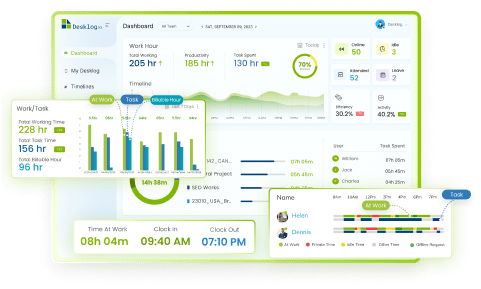
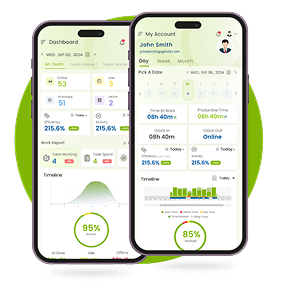
Desklog helps organizations improve employee productivity by providing comprehensive visibility into employee work patterns, project activities, and overall team performance.
Features such as automated time tracking, performance insights, project tracking, attendance monitoring, and workforce analytics enable businesses to identify inefficiencies and make informed decisions based on real-time data.
Rather than focusing on surveillance, Desklog helps organizations create transparency, improve accountability, and support sustainable productivity growth across both in-office and distributed teams.
The Productivity Cycle: How Small Time Savings Create Major Business Growth
Many organizations focus on large productivity initiatives while overlooking small daily inefficiencies.
Although minor on their own, these lost minutes can significantly impact performance when accumulated across teams and projects.
Time tracking software helps uncover these hidden productivity gaps, enabling organizations to make continuous improvements that drive greater efficiency and business growth.
Step 1: Capture Work Data
The first step toward productivity improvement is understanding how work is actually being performed.
Without data, managers often rely on assumptions when evaluating workloads, project timelines, and employee performance.
Time tracking software automatically captures work activities, providing accurate insights into where time is being spent.
This visibility creates the foundation for effective productivity improvement strategies because decisions are based on facts rather than guesswork.
Step 2: Identify Productivity Gaps
Once data is available, organizations can begin identifying areas where productivity is being lost.
These gaps may include:
- Excessive time spent on administrative tasks
- Repetitive manual processes
- Resource bottlenecks
- Frequent interruptions
- Underutilized employee capacity
Recognizing these challenges helps businesses discover practical ways to improve employee productivity without making unnecessary changes to existing workflows.
Step 3: Optimize Processes and Workflows
After identifying productivity barriers, organizations can focus on improving the systems that support daily work.
This may involve:
- Automating repetitive tasks
- Simplifying approval processes
- Reducing unnecessary meetings
- Improving task prioritization
- Enhancing team collaboration
Small workflow improvements often generate significant gains in employee productivity at work over time.
Step 4: Measure Progress
Productivity improvements should always be measurable. Time tracking software enables organizations to compare performance before and after changes are implemented.
This allows managers to evaluate which initiatives produce meaningful results and which require further adjustment.
Continuous measurement is one of the most effective workforce productivity improvement practices because it encourages ongoing optimization rather than one-time fixes.
Step 5: Repeat and Scale
High-performing organizations treat productivity as a continuous process rather than a temporary initiative.
As improvements are identified and validated, successful strategies can be expanded across departments and teams.
This creates a culture of ongoing efficiency and sustainable growth.
How Managers Use Productivity Data to Improve Team Performance?
Managers play a critical role in determining whether productivity initiatives succeed or fail.
However, effective management requires visibility into team performance, workload distribution, and operational challenges.
Time tracking software provides managers with the insights they need to make smarter decisions and support long-term team productivity improvement.
Allocating Resources More Effectively
One of the biggest productivity challenges organizations face is uneven workload distribution.
When some employees are overloaded while others have available capacity, productivity suffers and burnout risks increase.
Time tracking data helps managers identify workload imbalances and allocate resources more effectively, ensuring that projects move forward without overburdening specific team members.
Conducting Better Performance Discussions
Performance reviews are often based on subjective observations rather than objective information.
With accurate productivity data, managers can have more meaningful conversations about performance, challenges, and development opportunities.
This approach supports employee performance and productivity improvement while creating greater transparency and fairness.
Identifying Burnout Before It Impacts Performance
Employee burnout remains one of the most significant threats to workplace productivity.
Excessive workloads, long working hours, and unrealistic expectations can reduce motivation, increase errors, and negatively affect employee wellbeing.
Time tracking software helps managers recognize warning signs early by highlighting patterns such as:
- Consistent overtime
- Excessive workloads
- Reduced productivity levels
- Declining efficiency
These insights support healthier workplace practices and help prevent long-term productivity losses.
Supporting Data-Driven Decision Making
One of the most valuable manager tips for employee productivity is to make decisions based on evidence rather than assumptions.
Productivity analytics provide actionable insights that support:
- Workforce planning
- Hiring decisions
- Project scheduling
- Capacity forecasting
- Process improvements
This data-driven approach enables organizations to improve team productivity while reducing operational inefficiencies.
How Time Tracking Software Supports Remote Employee Productivity
Managing productivity in remote teams requires greater visibility into work progress, time utilization, and employee performance.
Time tracking software helps organizations maintain accountability while providing insights that support efficiency and collaboration.
- Provides visibility into employee work hours, tasks, and project progress regardless of location.
- Helps identify productivity trends, time-consuming activities, and workflow bottlenecks.
- Encourages better time management and accountability among remote employees.
- Supports managers in balancing workloads and allocating resources effectively.
- Improves communication by providing clear insights into work status and team performance.
- Builds trust through transparent productivity data focused on outcomes rather than constant monitoring.
Improving Productivity in Hybrid Work Environments
Hybrid work environments require organizations to manage productivity consistently across both office and remote teams.
Data-driven workforce management helps maintain collaboration, performance visibility, and operational efficiency regardless of where employees work.
Using time tracking software to manage hybrid work helps organizations to;
- Create consistent productivity tracking for both remote and office-based employees.
- Help managers measure performance fairly across different work locations.
- Improve collaboration by providing visibility into team activities and project progress.
- Identify workload imbalances and operational inefficiencies before they impact results.
- Support data-driven decision-making for resource planning and workforce management.
- Enable organizations to maintain accountability, productivity, and alignment in hybrid teams.
Practical Employee Productivity Strategies Enabled by Time Tracking
Setting Realistic Productivity Goals
Productivity goals are most effective when they are based on actual work patterns rather than assumptions.
Time tracking data helps managers understand how long tasks take, identify workload capacity, and set achievable performance targets.
Realistic goals reduce employee stress while encouraging consistent improvement.
How to Set Goals to Improve Employee Productivity
Organizations can use time tracking reports to establish measurable productivity benchmarks.
By reviewing task completion times, project durations, and work habits, teams can create goals that are specific, attainable, and aligned with business objectives.
Manager Tips for Employee Productivity
Managers can improve productivity by focusing on priorities, eliminating workflow bottlenecks, and providing timely support.
Time tracking insights help identify where employees need assistance and where processes can be simplified for better performance.
How to Give Employees Feedback to Improve Productivity
Constructive feedback is more effective when supported by data. Time tracking allows managers to discuss work patterns, recognize strengths, and address challenges with objective information, creating more productive and meaningful conversations.
Creating an Employee Productivity Improvement Plan
A productivity improvement plan should identify current challenges, define clear objectives, and track progress over time.
Time tracking provides measurable insights that help employees and managers monitor improvements and adjust strategies when necessary.
How Different Industries Use Time Tracking to Boost Productivity
Software Development Teams
Development teams use time tracking to manage sprints, estimate project timelines, monitor resource allocation, and improve delivery efficiency.
It helps teams understand where development time is spent and optimize workflows.
Marketing and Creative Agencies
Agencies rely on time tracking to manage client projects, monitor billable hours, and balance workloads across creative teams.
Better visibility into project time improves planning and profitability.
Customer Support and Call Centers
Time tracking helps support teams monitor response times, workload distribution, and service efficiency.
Managers can identify performance trends and improve operational effectiveness without disrupting customer service quality.
Consulting and Professional Services
Consultants use time tracking to manage client engagements, track billable hours, and ensure resources are allocated effectively.
Accurate time data supports better project planning and profitability.
Small Businesses
Small businesses often have limited resources, making efficient time management critical.
Time tracking helps owners understand how work is distributed and identify opportunities to improve team performance.
Small teams can increase productivity by prioritizing high-value tasks, reducing unnecessary meetings, and using time tracking to understand where time is being spent.
This creates greater focus and efficiency across the team.
Common Misconceptions About Employee Time Tracking
“Time Tracking Is Employee Surveillance”
Time tracking is designed to measure work activity and productivity trends, not monitor employees constantly.
When implemented transparently, it serves as a performance improvement tool rather than a surveillance system.
“Tracking Time Reduces Employee Trust”
Trust is strengthened when employees understand why time tracking is being used.
Clear communication and transparency help ensure that tracking supports productivity rather than creating concerns.
Increase Employee Productivity Without Surveillance
Organizations can improve productivity by focusing on workflows, task management, and performance insights rather than monitoring individual behavior.
Time tracking provides operational visibility without intrusive oversight.
How to Track Employee Productivity Without Being Intrusive
The best approach is to track work outcomes, project progress, and time allocation while respecting employee autonomy.
This balances accountability with trust and flexibility.
Choosing the Right Time Tracking Software for Your Organization
Essential Features to Look For
Effective time tracking software should include automatic time tracking, project management, reporting, attendance monitoring, productivity analytics, and team management capabilities.
Productivity Solutions for Teams
Modern productivity solutions combine time tracking with task management, collaboration tools, and performance reporting to help teams work more efficiently.
Tools to Increase Employee Productivity
Organizations can improve productivity by using tools that provide visibility into work hours, project progress, workload distribution, and operational performance.
How Technology Helps Increase Employee Productivity
Technology automates routine tasks, improves communication, provides actionable insights, and helps employees focus on meaningful work.
Time tracking software plays a key role in this process.
Best Practices for Implementing Time Tracking Successfully
Communicate the Purpose Clearly
Employees should understand that time tracking is intended to improve productivity, simplfy workflows, and support better decision-making rather than monitor individuals.
Focus on Improvement, Not Monitoring
Organizations should use time tracking data to identify opportunities for process improvement and workload optimization rather than focusing solely on employee oversight.
Encourage Employee Participation
Employee involvement increases adoption and trust. Gathering feedback and addressing concerns helps create a more successful implementation process.
Use Insights to Improve Processes
Time tracking data can reveal inefficiencies, repetitive tasks, and workflow bottlenecks that affect productivity.
Addressing these issues leads to continuous improvement.
Turn Data Into Actionable Productivity Improvement Strategies
The value of time tracking comes from acting on the insights collected.
Organizations should use reports and analytics to refine processes, improve resource allocation, and support long-term productivity growth.
Conclusion
Time tracking is more than a record of hours worked.
It helps organizations increase workforce productivity, improve employee productivity, support remote teams, and make better business decisions through data-driven insights.
When used correctly, it enhances employee engagement and productivity while helping businesses achieve sustainable growth without micromanagement.
FAQs
1How does time tracking software increase employee productivity?
Time tracking software increases productivity by helping employees and managers understand how work hours are spent, identify inefficiencies, reduce wasted time, improve workload management, and make data-driven decisions that support better performance.
2How can organizations improve employee productivity without micromanaging?
Organizations can improve employee productivity without micromanaging by focusing on transparency, goal-setting, workload management, and productivity insights rather than constant supervision.
Time tracking software provides visibility while preserving employee autonomy.
3How do you measure and increase employee productivity?
Businesses can measure productivity using metrics such as productive hours, utilization rates, project completion speed, workload balance, and resource capacity.
These insights help identify improvement opportunities and support targeted productivity initiatives.
4How does time tracking help remote employee productivity?
Time tracking improves remote employee productivity by increasing visibility into work progress, supporting accountability, improving communication, and helping managers balance workloads across distributed teams.
5What are the best employee productivity strategies for modern workplaces?
Some of the most effective employee productivity strategies include setting clear goals, improving workload distribution, reducing unnecessary meetings, automating repetitive tasks, monitoring productivity metrics, supporting employee engagement, and using technology to improve workflow efficiency.
6Why is employee engagement important for productivity?
Employee engagement directly influences motivation, commitment, collaboration, and work quality.
Engaged employees are generally more productive, more innovative, and more likely to contribute positively to organizational success.