




How to Manage Gen Z in the Workplace: Turning Chaos into Clarity



Gen Z brings speed, flexibility, and digital-first thinking into the workplace. However, traditional management methods often fail to support how they naturally work. Without systems like workforce intelligence software, maintaining clarity, visibility, and alignment becomes a daily challenge for managers.
The Core Problem: Why Managing Gen Z Feels Difficult
Managing Gen Z becomes challenging not because of their capabilities, but because of how work is structured around them. When systems lack clarity and visibility, even highly capable teams can become misaligned and inefficient.
Lack of Clarity in Daily Work
In many workplaces, tasks are assigned without clear priorities, timelines, or ownership. Employees may receive instructions, but without proper context, they are left to interpret what needs to be done first and how it contributes to the larger goal. This often leads to situations where effort is being put in, but not always in the right direction.
Over time, this lack of clarity creates confusion, missed deadlines, and inconsistent output. For Gen Z employees, who prefer structured and transparent workflows, unclear expectations can quickly reduce engagement and motivation.
Constant Miscommunication
Communication today is no longer confined to one channel. Teams use multiple tools; messages, emails, task boards and important updates often get scattered across them. As a result, employees may miss critical information, and managers end up repeating instructions or chasing responses.
This constant back-and-forth slows down progress and creates unnecessary friction in daily operations. Instead of focusing on meaningful work, both managers and employees spend time trying to stay aligned, which impacts overall productivity.
No Clear Visibility into Productivity
One of the biggest challenges managers face is the inability to clearly see how work is progressing. Without real-time insights, it becomes difficult to understand how time is being spent, which tasks are taking longer than expected, or where bottlenecks are forming.
This lack of visibility forces managers to rely on assumptions rather than data. It also makes it harder to provide timely support to employees or make informed decisions about workload and performance.
Uneven Workload Distribution
When there is no clear understanding of who is working on what, workload distribution becomes inconsistent. Some employees may be handling multiple tasks under tight deadlines, while others may not have enough work to stay fully engaged.
This imbalance not only affects productivity but also impacts team morale. Overworked employees may feel burned out, while underutilized employees may feel disconnected from the team’s progress. Without proper visibility, maintaining balance becomes difficult.
The Shift Needed: From Control to Clarity
To manage Gen Z effectively, the approach needs to shift from constant supervision to building clarity into every aspect of work. Instead of relying on follow-ups and manual tracking, managers need systems that make work visible, structured, and easy to understand.
What Modern Teams Actually Need
Modern teams perform best when they have access to clear systems that reduce confusion and improve alignment. It’s not about working harder, it’s about working with better visibility and structure.
- Clear task structures ensure every team member knows what needs to be done, when it needs to be completed, and how it contributes to the overall objective.
- Real-time visibility allows managers and employees to track progress without constantly asking for updates, creating a smoother workflow.
- Reduced dependency on manual updates helps teams focus more on actual work instead of reporting what they’ve done.
- Balanced workload distribution ensures that work is spread evenly, preventing employee burnout while keeping everyone engaged.
The solution isn’t tighter control, it’s smarter systems that bring clarity, consistency, and transparency into everyday work.
How Desklog Solves These Challenges
Managing Gen Z becomes easier when work is structured, visible, and supported by real data. Desklog replaces guesswork with clarity, helping managers track work, improve alignment, and maintain consistency without constant follow-ups.
Eliminate Guesswork with Automated Time Tracking
One of the biggest gaps in managing Gen Z teams is not knowing where time actually goes. Without clear visibility, productivity is often misunderstood and difficult to measure accurately.
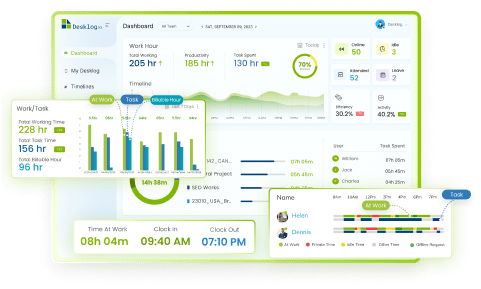
With Automated Time Tracking, Desklog records work hours automatically without manual input, ensuring accurate and consistent data across the team. It includes idle tracking to highlight inactivity and identify time gaps, helping managers understand real work patterns.
Offline tracking ensures that work done outside active sessions is still captured, maintaining complete visibility. The clock-in and clock-out feature adds structure to work hours, making time management more disciplined and transparent.
Track Where Time Is Spent Across Projects
Tracking time alone is not enough, managers need clarity on how that time is distributed across tasks and projects. Without this context, improving efficiency becomes difficult.
Desklog’s Project Time Tracking shows how time is allocated across tasks and projects, helping managers identify inefficiencies and improve planning accuracy. It provides a clear breakdown of effort, making it easier to understand where resources are being used.
The system also supports billing and invoice generation, directly linking tracked time with client deliverables. Additionally, the profit and loss calculator helps evaluate project performance by connecting effort with actual business outcomes.
Make Work Visually Trackable
When work isn’t visible, teams struggle to stay aligned and managers depend on frequent updates. This lack of transparency slows down execution and creates confusion.
With Kanban View, Desklog organizes tasks into a structured visual workflow, making it easy to track progress across different stages. Each task moves through defined columns, allowing teams to instantly understand current status and priorities.
This visibility reduces the need for constant follow-ups and improves coordination across the team. As a result, workflows become clearer, more transparent, and easier to manage.
Break Down Complex Work
Large tasks can create confusion when they are not clearly structured. Without proper breakdown, execution becomes slower and important steps can be missed.
Desklog’s Subtasks feature allows teams to divide complex work into smaller, manageable actions, making execution more structured and clear. This helps employees focus on individual components without feeling overwhelmed.
It also improves accuracy by ensuring that each part of the task is properly addressed. Overall, subtasks make workflows more organized and easier to complete efficiently.
Maintain Proper Workflow Order
Unstructured workflows can disrupt progress and create inefficiencies. Teams often waste time deciding what needs to be done next.
With Sequential Tasks, Desklog ensures that work follows a logical order, where each step depends on the completion of the previous one. This creates a smooth and predictable workflow, especially for multi-step processes.
It helps reduce confusion by clearly defining what comes next in the workflow. As a result, teams can execute tasks more efficiently and with fewer delays.
Reduce Repetitive Manual Work
Repetitive tasks can take up valuable time and reduce focus on more important work. Manual handling of routine activities often leads to inefficiencies.
Desklog’s Recurring Tasks feature automates routine activities by scheduling them to repeat at defined intervals, eliminating the need for manual creation. This ensures consistency across daily, weekly, or monthly workflows.
It also reduces the chances of missing important recurring tasks. By automating repetition, teams can focus more on meaningful and high-impact work.
Balance Workload Across the Team
Workload imbalance can lead to burnout for some employees and disengagement for others. Without visibility, maintaining balance becomes difficult.
Using Task Utilization Insights, Desklog provides a clear overview of how work is distributed across the team, helping managers identify imbalances. It highlights overloaded employees as well as those with available capacity.
This allows for better workload distribution and improved resource management. As a result, teams stay productive while maintaining a healthier balance.
Make Better Decisions with Real Data
Without reliable insights, decisions are often based on assumptions rather than actual performance. This can lead to inefficiencies and missed opportunities.
Desklog’s Performance Insights provide detailed and accurate data on productivity, task completion, and overall team efficiency. Managers can easily track performance trends and identify areas that need improvement.
This enables more informed and data-driven decision-making. Ultimately, it helps optimize workflows and improve overall team performance.
Build a Healthier Work Environment
A sustainable work environment depends on maintaining both performance and employee well-being. Without clear insights, it becomes difficult to identify unhealthy work patterns.
Desklog’s Employee Wellness Feature integrates well-being into daily workflows through intelligent time tracking and structured break reminders. It helps teams maintain healthy work habits with timely pauses, reducing fatigue and improving focus.
This enables consistent productivity while supporting long-term employee well-being and preventing burnout. It also provides managers with insights into work patterns, helping them proactively address overwork. As a result, teams stay more engaged, energized, and aligned with sustainable performance goals.
The Result: A Structured and Aligned Team
When work becomes visible and structured, managing Gen Z no longer feels chaotic. Instead of constant follow-ups and uncertainty, teams operate with clarity, accountability, and a clear sense of direction.
What Changes
Less Chasing for Updates
With clear visibility into tasks and progress, managers no longer need to constantly follow up for updates.
Work status is available in real time, reducing dependency on manual communication.
This allows managers to focus on decision-making instead of tracking basic progress.
As a result, daily operations become smoother and more efficient.
Clear Communication
When workflows are structured, communication becomes more direct and consistent across the team.
Everyone has access to the same information, reducing misunderstandings and repeated instructions. This improves coordination between team members and managers.
Clear communication ensures that work moves forward without unnecessary delays.
Better Accountability
Defined tasks and transparent workflows make it clear who is responsible for what.
Employees understand their roles and contributions within the team more effectively. This encourages ownership and reduces dependency on constant supervision.
As a result, accountability becomes a natural part of the workflow.
Measurable Productivity
With real-time tracking and performance insights, productivity is no longer based on assumptions.
Managers can clearly see how work is progressing and where improvements are needed.
This enables data-driven decisions and better performance evaluation. Measurable productivity creates a more structured and results-oriented work environment.
Conclusion: Manage Smarter, Not Harder
Managing Gen Z becomes easier when work is visible, structured, and measurable.
The challenge isn’t the team, it’s the lack of clarity in how work is managed.
Desklog bridges that gap by providing real-time visibility, structured workflows, and automated tracking.
With the right system in place, managers can move from constant follow-ups to confident decision-making, creating a more aligned and productive workplace.
Stop Chasing Work. Start Managing It!
If your day is filled with follow-ups and unclear updates; start with Desklog. Bring clarity to your team.
Get Free TrialFAQs
1How do you effectively manage Gen Z employees?
2Why is managing Gen Z considered challenging?
3What motivates Gen Z employees at work?
4How important is real-time feedback for Gen Z?
5How can managers improve communication with Gen Z teams?
6How do you ensure fair workload distribution in a Gen Z team?
7What role does technology play in managing Gen Z?
8How can companies prevent burnout among Gen Z employees?
Meet The Author

Product Specialist & Research Head
