




Is 70-Hour Workweek Really the Solution For Better Productivity?



In late 2024 and early 2025, India’s work culture sparked a major debate after a well-known industry veteran suggested that young professionals should be ready to work 70-hour weeks.
This triggered widespread criticism across the country. Around the same time, a leading IT company told its employees not to exceed 9.15 working hours a day and even sent alerts when someone crossed that limit.
These two very different viewpoints highlighted India’s ongoing discussion about productivity and employee well-being.
Two opposite opinions. One national debate. But one important question: Do more working hours really mean better productivity?
This blog explains what this clash reveals about changing workplace expectations.
Building a healthy work culture means supporting employee well-being, fairness, and efficiency and tools like time tracking software help companies manage this balance more effectively.
Why The Debate Incident Sparked a National Conversation
The debate gained national attention because it highlighted the gap between old long-hours thinking and today’s need for healthy, sustainable productivity. With hybrid and remote work becoming the norm, it’s clear that outdated ideas about “more hours = more output” no longer fit the way modern teams work.
Key reasons the debate grew so widespread:
- It highlighted the gap between old and new productivity philosophies
- It questioned whether long hours still give better results
- It brought work-life balance and burnout into mainstream discussion
- It challenged outdated norms around presenteeism vs. output
- It resonated with India’s growing remote and hybrid workforce
Traditional Mindset: Long Hours Equal Dedication
For decades, staying late and clocking more hours was seen as a badge of honor. Many believed that more time spent at work automatically meant higher commitment and better output, leading to a culture where visibility often mattered more than true performance.
This mindset was shaped by beliefs such as:
- More hours = more output
- Staying late signals loyalty and hard work
- Presence is valued more than results
- Career growth depends on visible effort
- Employees are judged by time spent, not outcomes
Modern Mindset: Productivity Comes From Smart Work
Today’s leading organizations recognize that sustainable productivity is what drives performance. Remote and hybrid setups have reinforced the shift toward outcome-based evaluation and employee well-being.
Modern companies prioritize:
- Healthy work boundaries
- Output-focused evaluation
- Sustainable productivity habits
- Burnout prevention and retention
- Transparent, accurate work-hour tracking
What the 9.15-Hour Guideline Really Signaled
When a major IT company set a 9.15-hour daily benchmark, it wasn’t about limiting ambition. It was about ensuring that productivity was achieved responsibly. The message reflected a deeper understanding of how overwork reduces efficiency and harms long-term performance.
- Long hours don’t guarantee high-quality work
- Overextension leads to fatigue and lower efficiency
- Employee well-being is a strategic priority
- Remote teams need clarity and structure
- Sustainable workflows outperform hustle-based cultures
The Productivity Reality: Long Hours Don’t Guarantee Better Results
For years, companies assumed that working longer meant producing more. But modern research shows the opposite. After a point, long hours reduce efficiency, harm well-being, and lead to burnout. Instead of improving performance, overwork actually lowers focus, energy and overall output.
1. Cognitive Fatigue Sets In
Long workdays strain the brain, making sustained concentration impossible. Once mental fatigue takes over, performance declines sharply.
- Loss of focus during critical tasks
- Increase in errors and rework
- Slower decision-making
- Longer completion times for simple tasks
2. Creativity Drops
Creative thinking requires rest, clarity and mental breathing room, none of which are supported by excessively long hours.
- The brain shifting into “survival mode”
- Less time for reflection and deep thinking
- Reduced problem-solving capacity
- Creativity being replaced by repetitive task execution
3. Health Suffers
Overwork has a direct and measurable impact on both physical and mental health, reducing long-term performance and engagement.
- Chronic stress and exhaustion
- Sleep deprivation
- Anxiety, irritability and mood decline
- Weakened immunity
4. Companies Lose More Than They Gain
Organizations that push long-hour cultures face hidden operational and cultural costs that compound over time.
- Higher turnover, especially among top performers
- Lower morale and disengaged teams
- Drop in collaboration and communication
- Silent quitting and minimal-effort work
Why Productive Hours Matter More Than Long Hours
There’s a crucial insight missing from the long-hours conversation: It’s not about how long you work – it’s about how productively you work. A focused, energized employee delivering 6 high-quality hours is far more valuable than an exhausted employee clocking 12 hours of fragmented, inefficient work.
What the 70-Hour vs 9.15-Hour Contrast Reveals About Modern Work Culture
1. There Is a Generational Shift in Work Philosophy
Traditional work culture believed that longer hours reflected higher commitment and output. People were expected to stay late, be visibly present and “earn” their value through time spent. In contrast, today’s workforce values smarter, outcome-driven performance. Quality, creativity, and consistency matter more than the number of hours clocked, especially in knowledge-based roles.
2. Remote and Hybrid Work Changed Visibility
With remote and hybrid models, leaders can no longer rely on physical presence, so they seek clearer visibility into work patterns. Meanwhile, employees want flexibility to structure their days productively. This tension pushed organizations toward systems that offer real-time visibility, fair evaluation, and accountability without micromanagement, helping build greater trust between teams and leadership.
3. Companies Now Prioritize Work-Life Balance
Years of burnout, stress and high attrition taught organizations that long-hour cultures are unsustainable. Modern companies now focus on protecting personal time, encouraging healthy boundaries, and supporting timed breaks. Balanced teams stay longer, perform better, and innovate more consistently, making work-life balance a business necessity, not a perk.
4. Leaders Need Data, Not Assumptions
In distributed workplaces, assumptions no longer work. Leaders now rely on data such as active hours, focus patterns, productivity trends, and workload indicators to understand team performance. This data-driven approach helps organizations allocate resources, support employees proactively, reward performance fairly and make more strategic decisions overall.
How Desklog Helps Companies Improve Productivity Without Burning Out Teams
Automatic Time Tracking
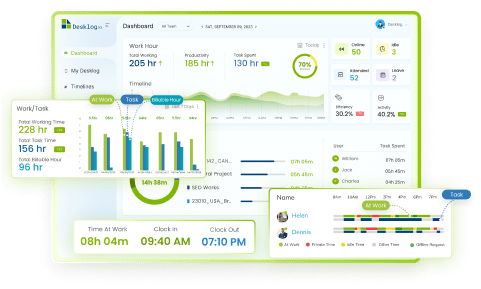
Desklog removes the need for manual time keeping with automated time tracking, ensuring complete accuracy in how employee time is spent. This gives leaders a clear, real-time view of active hours and workflow patterns without any friction for teams.
- Captures work hours automatically
- Tracks task and project progress
- Eliminates guesswork and manual reporting
Productivity Scoring
Desklog differentiates between time spent working and time spent working productively, helping companies understand true efficiency rather than just logged hours.
- Separates productive hours from total hours
- Highlights focused vs. distracted work periods
- Shows real efficiency trends over time
Burnout & Overwork Alerts
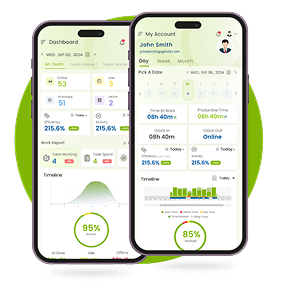
Desklog’s Insights feature helps prevent burnout by highlighting unusual work patterns early. Managers can easily spot changes in employee productivity, and efficiency, allowing them to step in before issues escalate.
- Detects when employees exceed healthy hour limits
- Weekly and monthly comparisons reveal dips or spikes in performance
- Surfaces early signs of fatigue or overwork
Activity & Timeline Reports
Desklog visualizes an employee’s entire workday, making it easy to assess balance, workload, and focus distribution.
- Shows focus time, break time and deep-work sessions
- Highlights workflow bottlenecks and overload
- Helps managers rebalance tasks more effectively
Hybrid & Remote Team Visibility
Desklog provides transparent remote team performance insights without micromanagement, helping leaders maintain accountability while respecting autonomy.
- Clear visibility into remote and hybrid work patterns
- Tracks progress without invasive monitoring
- Ensures fairness across distributed teams
- Supports high performance with employee trust intact
Conclusion
The 70-hour vs. 9.15-hour debate shows one clear truth: the future of work is not about working more hours, but about making the hours we work truly productive. Research and real-world experience both prove that overwork harms focus, creativity, and health while balanced, well-planned workflows lead to better performance and long-term success. Desklog supports this modern mindset by giving companies real-time visibility, spotting burnout risks early, and showing actual productive hours instead of just time spent online. With smarter insights and healthier work habits, teams can do their best work without sacrificing well-being.
FAQs
1. Do longer working hours mean better results?
2. What does the 9.15-hour work limit really mean?
3. How do long working hours affect employees?
4. How has remote and hybrid work changed productivity?
5. Why is work-life balance important for companies today?
6. What matters more: working long hours or working productively?
7. How does Desklog help prevent burnout?
8. Is Desklog’s tracking intrusive or uncomfortable for employees?
Meet The Author

Product Specialist & Research Head
