




Best Workforce Management Software You Can Trust in 2026



Managing teams with spreadsheets, scattered messages, and manual tracking slows everything down. Tasks fall through the cracks, managers spend hours chasing updates, and employees feel overwhelmed instead of supported. As teams become more distributed and work becomes more data-driven, outdated coordination methods simply can’t keep up.
The right workforce management software changes that. Instead of micromanaging people, you gain clear visibility into workloads, time usage, and team performance, all in one place. Decisions become proactive instead of reactive, and productivity improves without added pressure.
In this guide, we compare the most trusted workforce management software in 2026. You’ll discover key features, benefits, and use cases to help you choose the right platform for your team’s structure, goals, and scale.
Overview
- What Is Workforce Management Software and Why It Matters in 2026
- Key Benefits of Workforce Management Software
- Must-Have Features in Workforce Management Software
- Best Workforce Management Software You Can Trust in 2026
- Workforce Management Software vs Task Management Software
- How to Choose the Right Workforce Management Software
- Who Should Use Workforce Management Software
Let’s quickly get into it!
What Is Workforce Management Software and Why It Matters in 2026
Workforce management software is a centralized system that helps organizations plan, track, analyze, and optimize employee work. It typically includes scheduling, time tracking, productivity monitoring, performance analytics, and reporting tools that provide a complete view of workforce activity.
Unlike task management software, which focuses primarily on organizing work items, a workforce management system focuses on people, time, and performance. It answers questions like:
- Who is working on what?
- How long does work take?
- Are workloads balanced?
- Is productivity improving?
Modern employee workforce management tools have become essential because work environments are more complex than ever. Teams operate across locations, time zones, and devices. Compliance requirements are stricter, and leaders need reliable data to make staffing decisions.
Several trends are shaping workforce management software in 2026:
- Remote and hybrid work as standard practice
- AI-driven insights for performance optimization
- Automation of attendance and reporting
- Stronger data security and compliance controls
- Integration across HR, project, and payroll systems
Organizations now rely on workforce management platforms not just to track work but to improve how work happens.
Key Benefits of Workforce Management Software
Boost productivity without micromanagement
Real-time visibility supports employee accountability while allowing teams to work independently with minimal oversight.
Ensure accurate time, attendance, and payroll
Automated tracking delivers reliable records, simplifies payroll, and builds trust through transparent data.
Optimize workload and task allocation
Insight into team capacity helps balance work effectively, reducing employee burnout and improving consistency.
Enable real-time performance insights
Centralized dashboards reveal trends and metrics that improve the rate of employee efficiency and speed up decision-making.
Strengthen compliance and transparency
Auditable records support labor compliance, policy adherence, and organizational accountability.
Must-Have Features in Workforce Management Software
Modern workforce management software should provide a unified platform for managing people, work, and performance across the organization. The right solution combines operational visibility with practical tools that support both managers and employees.
- Task and Project Management : Assign and track work with clear ownership and deadlines. Integrated tools reveal the impact of project time tracking improving planning and resource allocation.
- Time Tracking and Attendance : Automated tracking ensures accurate records for payroll and reporting. Reliable time data reduces disputes and supports clear workforce insights.
- Workforce Scheduling : Plan shifts and allocate resources based on availability and workload distribution Effective scheduling prevents gaps and controls overtime costs.
- Productivity and Performance Analytics : Actionable insights into efficiency and outcomes help managers make decisions that enhance overall productivity.across teams.
- Reports and Dashboards : Real-time dashboards and reports provide clear visibility into workforce trends, utilization, and operational performance.
- Integrations and Scalability : Seamless integration with HR and payroll systems ensures consistent data flow and supports organizational growth.
- Data Privacy and Security : Enterprise-grade security, encryption, and role-based access protect sensitive workforce data and ensure compliance.
| Feature | Essential | Advanced |
|---|---|---|
| Time tracking | ✔️ | Automated + AI insights |
| Task management | ✔️ | Workflow automation |
| Scheduling | ✔️ | Predictive staffing |
| Analytics | ✔️ | Performance forecasting |
| Reporting | ✔️ | Custom dashboards |
| Integrations | ✔️ | Enterprise ecosystem |
| Security | ✔️ | Compliance-ready controls |
Best Workforce Management Software You Can Trust in 2026
- Desklog
- ClickUp
- HubSpot
- Trello
- Time Doctor
1.DesklogBest for Productivity Tracking and Workforce Visibility
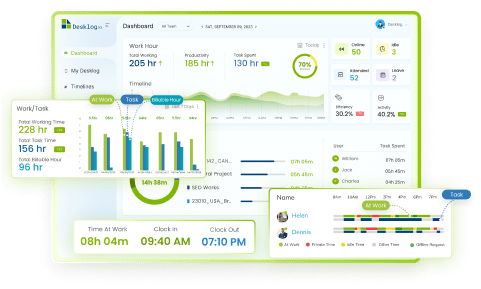
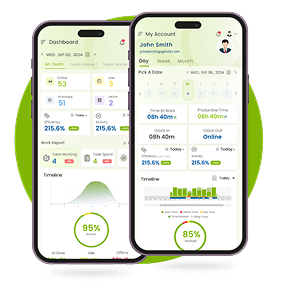
Desklog is designed to give organizations a clear, data-driven understanding of how work happens across teams. By automatically capturing work activity and translating it into structured productivity insights, it helps leaders evaluate performance, improve resource allocation, and strengthen operational transparency. Its focus on continuous visibility makes it especially effective for remote, hybrid, and performance-oriented environments where real-time awareness is essential.
- Automated Workforce Time Tracking
Desklog’s automatic time tracking captures work hours, activity patterns, and availability without manual input, providing clear visibility into workforce utilization. - Automated Timesheets and Workforce Records
Structured workforce timesheets are generated from real-time data, supporting payroll, compliance, and consistent workforce documentation. - Workforce Task and Project Management
Centralized task control with integrated project time tracking improves coordination, accountability, and on-time project delivery. - Workforce Billing and Cost Tracking
Financial visibility through project billing tracks billable time and monitors project costs overrun for accurate revenue and cost control. - Workforce Profitability and Loss Tracking
Built-in project profit and loss analysis compares labor input with outcomes to evaluate efficiency and optimize resource allocation. - Workforce Productivity and Utilization Analytics
Data-driven performance insights reveal trends in efficiency, utilization, and workforce effectiveness across teams. - Privacy-First Workforce Tracking
Transparent tracking practices provide workforce visibility while protecting employee trust through responsible and controlled tracking.
- Provides measurable visibility into workforce productivity and operational performance.
- Reduces manual tracking and reporting workload through automation.
- Supports informed decision-making with actionable performance data.
- Enhances accountability while maintaining employee autonomy.
- Organizations may need structured processes to fully utilize advanced analytics.
- Teams unfamiliar with data-driven performance measurement may require onboarding support.
Ideal For: IT teams, agencies, and distributed organizations seeking operational transparency
2.ClickUpBest for Custom Workflows and Task-Heavy Teams
ClickUp is a flexible work management platform built to support organizations with structured processes and complex workflows. It centralizes planning, execution, and collaboration in one environment, allowing teams to customize how work is organized and tracked. Its strength lies in workflow adaptability and task coordination rather than workforce performance analytics.
- Customizable task hierarchies allow teams to structure work according to organizational processes and priorities.
- Multiple project views provide flexibility in how work is visualized, including lists, boards, calendars, and timelines.
- Workflow automation reduces repetitive actions such as task assignments, status updates, and notifications.
- Collaboration tools support communication, documentation, and file sharing within the workflow environment.
- Integration capabilities connect ClickUp with external productivity and business systems for centralized operations.
- Highly adaptable to diverse operational structures and team needs.
- Strong coordination of projects, tasks, and deliverables across teams.
- Supports scalable collaboration as organizational complexity increases.
- Enables process standardization through automation and customization.
- Extensive customization options may require setup time and training.
- Limited built-in workforce productivity analytics compared to dedicated workforce tools.
- Overconfiguration can create complexity if governance is not maintained.
Ideal For: Process-driven teams managing structured and task-intensive workflows
3.HubSpotBest for Businesses Combining Workforce and CRM Workflows
HubSpot integrates workforce-related coordination within a broader platform focused on customer relationships, sales operations, and service delivery. It is most effective in environments where employee activities directly support customer engagement and revenue generation. By connecting workforce actions with business outcomes, it provides a unified operational perspective across teams.
- CRM-integrated task and activity management connects employee work with customer interactions and business processes.
- Workflow automation streamlines cross-functional activities across sales, service, and operations.
- Performance dashboards provide visibility into team activities alongside customer and revenue metrics.
- Extensive integration ecosystem connects external tools into a centralized operational platform.
- Centralized data environment supports coordination across departments and workflows.
- Aligns workforce activities with customer-facing business objectives.
- Provides unified visibility across operational and revenue-related functions.
- Scales effectively as organizational needs expand.
- Reduces fragmentation by centralizing data and workflows.
- Workforce management capabilities are secondary to CRM functionality.
- May provide broader functionality than required for workforce tracking alone.
- Platform complexity can increase with additional modules and integrations.
Ideal For: Sales-driven and service-oriented organizations linking workforce activity to customer operations
4.TrelloBest for Simple Task Coordination
Trello provides a visual and intuitive method for organizing and tracking work through structured boards and cards. Its design prioritizes clarity, simplicity, and quick adoption, making it suitable for teams that require straightforward coordination rather than deep workforce analytics or performance optimization.
- Visual task boards organize work into stages that clearly represent workflow progress.
- Card-based task management allows detailed descriptions, attachments, checklists, and deadlines.
- Built-in collaboration features enable team communication directly within tasks.
- Automation tools handle repetitive workflow actions and status updates.
- Integration options extend functionality through external productivity tools.
- Easy to implement with minimal training requirements.
- Provides immediate visual clarity into task progress and responsibilities.
- Suitable for teams seeking lightweight coordination tools.
- Flexible structure supports a wide range of simple workflows.
- Limited reporting and workforce performance insights.
- Not designed for resource allocation or workload optimization.
- May become difficult to manage as operational complexity increases.
Ideal For: Small teams and organizations needing simple, visual task coordination
5.Time DoctorBest for Time-Focused Monitoring
Time Doctor is designed to provide detailed insight into how working time is used across individuals and teams. It emphasizes accountability and precise measurement of work hours, making it valuable for organizations that prioritize attendance transparency and time utilization tracking over broader workforce planning.
- Detailed time tracking records work hours across tasks and projects with high accuracy.
- Activity monitoring provides insight into application usage and work engagement patterns.
- Attendance reporting tracks work sessions, breaks, and overall time distribution.
- Productivity summaries categorize time usage to highlight efficiency trends.
- Integration capabilities connect time data with project management and billing tools.
- Provides precise measurement of work hours and activity levels.
- Strengthens accountability and transparency in time utilization.
- Supports payroll, billing, and reporting through structured time data.
- Helps organizations understand how work time is distributed across tasks.
- Limited functionality for workforce planning or workload balancing.
- Focuses on monitoring rather than comprehensive workforce optimization.
- Implementation may require clear communication around monitoring practices.
Ideal For: Organizations prioritizing accurate time tracking and accountability
Workforce Management Software vs Task Management Software
Organizations often confuse workforce management software with task management tools because both help coordinate work. However, their scope and purpose differ significantly. Workforce management software focuses on how people work, while task management software focuses on what work needs to be done.
Workforce management software provides visibility into employee time, availability, productivity, and resource utilization. It helps organizations plan capacity, balance workloads, monitor performance trends, and maintain accurate workforce records. These platforms support scheduling, attendance tracking, productivity analytics, and operational reporting, enabling leaders to make data-driven decisions about staffing and performance optimization.
Task management software, in contrast, is designed to organize and track tasks or projects. It helps teams assign responsibilities, set deadlines, and monitor progress within workflows. While task tools improve collaboration and organization, they typically offer limited insight into workforce efficiency, utilization, or labor-related performance metrics.
For organizations managing distributed teams, client billing, or workforce capacity, workforce management software provides broader operational oversight. Task management tools remain valuable for organizing work execution but do not replace workforce visibility or performance intelligence.
| Feature | Workforce Management Software | Task Management Software |
|---|---|---|
| Time Tracking | ✔️ | Limited |
| Productivity Analytics | ✔️ | ❌ |
| Scheduling | ✔️ | ❌ |
| Task Management | ✔️ | ✔️ |
How to Choose the Right Workforce Management Software?
Selecting the right workforce management software requires aligning technology capabilities with operational needs. Organizations should evaluate solutions based on workforce structure, compliance requirements, scalability, and the level of insight required for decision-making.
Team Size and Work Style
Consider how your workforce operates. Remote and hybrid teams benefit from real-time visibility into activity, availability, and productivity patterns. Larger teams may require automated tracking, centralized dashboards, and workload balancing tools to maintain efficiency. The chosen platform should support collaboration without creating administrative complexity.
Industry and Compliance Needs
Different industries have varying regulatory requirements related to time tracking, labor records, and reporting. Organizations should prioritize solutions that maintain structured workforce records, support audit readiness, and provide transparent documentation for compliance purposes.
Budget and Scalability
Workforce management software should support both current needs and future growth. Scalable platforms allow organizations to expand team size, projects, and reporting capabilities without requiring system replacement. Pricing transparency and flexible plans help ensure long-term cost efficiency.
Reporting and Insights Required
The value of workforce software depends heavily on the quality of insights it provides. Organizations should look for platforms that offer real-time dashboards, productivity analytics, utilization metrics, and customizable reports that support operational and strategic decisions.
- Need visibility into workforce productivity and utilization
- Manage remote, hybrid, or distributed teams
- Require accurate time, attendance, or labor records
- Want data-driven resource planning and performance insights
- Handle client billing or project-based workforce allocation
Who Should Use Workforce Management Software?
Workforce management software is valuable for organizations that need clear visibility into how people work, how time is used, and how resources are allocated. It supports operational efficiency, accountability, and data-driven decision-making across diverse industries and team structures.
Remote and Hybrid Teams
Distributed teams need clear visibility into availability, productivity, and workload distribution. Workforce management software enables effective remote employee management through centralized oversight and provides actionable remote employee management insights for managing geographically dispersed teams.
IT and Development Teams
Technology teams managing complex, multi-phase projects benefit from insights into time allocation, resource utilization, and delivery efficiency. Solutions like Desklog the time tracking software for developers, help track task effort, improve sprint planning, and optimize engineering productivity.
Agencies and Service Businesses
Service-based organizations depend on accurate time tracking and utilization data to maintain profitability. Desklog for Freelancers, Architects, and Data Entry teams support project-based work environments where output, time, and billing are closely connected.
Financial and Compliance-Driven Organizations
Industries requiring strict documentation and operational transparency benefit from structured workforce records and activity tracking. Desklog for Banks and Insurance Teams help maintain accountability, compliance readiness, and performance visibility.
High-Volume Operational Teams
Teams handling continuous workflows require real-time activity monitoring and efficiency insights. Desklog supports call centers for performance tracking, workload balance, and service optimization in fast-paced environments.
HR and Operations Teams
HR and operations leaders use workforce management systems for attendance oversight, performance evaluation, staffing decisions, and long-term workforce planning based on reliable data.
Conclusion: Choosing Workforce Management Software You Can Trust
Workforce management software helps organizations improve productivity, gain operational visibility, and manage teams with data-driven clarity. The right solution provides insight into time, resources, and performance while supporting scalable, accountable operations.
Choose platforms that deliver real workforce intelligence, not just task coordination.
FAQ
Meet The Author

Product Specialist & Research Head
