




How Many Working Days in a Year And Why Most Businesses Calculate It Wrong



Most businesses base payroll, leave and project planning on a standard “260 working days” without verifying it.
In reality, this number often doesn’t reflect actual work patterns due to differences in holidays, schedules and work models, leading to errors in payroll, leave, and timelines.
This guide explains the real number of working days, how to calculate it accurately, common mistakes businesses make and how using time tracking software can improve accuracy.
📋 In this blog, we’ll cover:
| Quick Answer |
A standard working year includes:
|
What Is the Standard Working Days Calculation?
Most organizations rely on a simple formula:
Working Days = 5 days × 52 weeks = 260 days
This assumes:
- A Monday–Friday workweek
- No holidays or leave deductions
- A consistent schedule across the entire year
Where This Formula Works and Where It Breaks
This formula works only as a baseline estimate. It breaks down when:
- Public holidays vary by region
- Employees work different schedules (shift/part-time)
- Organizations operate across multiple countries
- Company-specific leave policies are ignored
In short, it’s a starting point, not a final answer.
Why Most Businesses Get This Wrong
Calculating working days may seem simple, but most businesses rely on fixed assumptions that ignore real-world factors like regional holidays and varied work schedules.
This leads to small inaccuracies that can quickly impact payroll, leave management and project planning.
Ignoring Regional Public Holidays
Public holidays differ widely:
- India: ~10–15 days (varies by state)
- US: ~10 federal holidays
- UK: ~8 bank holidays
- Australia: ~10–13 depending on region
Using a generic number instead of region-specific data leads to overestimated working days.
Not Adjusting for Shift and Part-Time Workers
Not every employee works a standard 5-day schedule:
- Shift workers may rotate weekly
- Part-time employees work fewer days
- Freelancers or contract workers follow flexible timelines
Using a fixed 260-day model ignores these variations, creating inaccurate utilization and payroll data.
How These Errors Affect Payroll and Planning
Small miscalculations can compound into major issues:
- Payroll errors: Incorrect salary per day/hour calculations
- Leave mismanagement: Employees get incorrect leave balances
- Project delays: Timelines built on unrealistic workday assumptions
How to Calculate Working Days in a Year Correctly
Getting an accurate count of working days requires more than a basic formula.
Businesses need to account for real-world variables like weekends, public holidays, regional differences, and internal company policies.
By following a structured approach, you can arrive at a reliable number that supports accurate payroll, leave tracking, and project planning.
Step-by-Step Calculation
- Start with total days in a year: 365 days (or 366 in leap years)
- Subtract weekends: 104 days (52 weeks × 2 days)
- Result: 261 working days (approx.)
- Subtract public holidays: Example: 10–15 days
- Final result: ~245–251 working days
Adjusting for Your Country or Region
To get accurate results:
- Use official holiday calendars for your region
- Include state-level or regional holidays where applicable
- Account for floating holidays (optional leave days)
Factoring in Company-Specific Holidays
Every organization has unique policies:
- Company shutdown periods
- Extra leave days or wellness days
- Industry-specific off days
These must be subtracted to get your true working day count.
Working Days in a Year by Country
Working days are not consistent across the world. Each country follows its own public holiday calendar, labor laws, and work culture, which directly affects the total number of working days in a year.
For businesses operating across multiple regions, understanding these differences is essential to ensure accurate planning, fair workload distribution and realistic timelines.
Comparison Table
| Country | Avg. Public Holidays | Estimated Working Days |
|---|---|---|
| US | 10 | ~250 |
| UK | 8 | ~252 |
| India | 10–15 | ~245–250 |
| Australia | 10–13 | ~247–251 |
How Global and Remote Teams Handle Differences
For distributed teams:
- Working days vary across regions
- Holidays don’t align globally
- Time zone differences affect availability
Best practices include:
- Using region-specific calendars
- Planning projects with overlapping workdays
- Tracking actual work time instead of assumptions
How Working Days Affect Payroll, Leave, and Project Planning
Payroll Miscalculation Impact
Incorrect working days lead to:
- Wrong daily/hourly rates
- Overpayment or underpayment
- Compliance risks in payroll processing
Leave Planning Errors
If working days are miscalculated:
- Employees may receive incorrect leave balances
- HR teams struggle with tracking
- Disputes increase over time
Project Timeline Slippage
Projects planned on incorrect assumptions result in:
- Missed deadlines
- Poor resource allocation
- Reduced productivity visibility
How Tools Like Desklog Simplify Working Day Tracking
Accurately calculating working days is only half the challenge. Maintaining that accuracy across a growing team is where most businesses struggle.
As organizations grow, manual methods quickly become unreliable, leading to inconsistencies in payroll, leave tracking and productivity measurement.
Why Manual Tracking Creates Recurring Errors
Many businesses still rely on manual tracking or fixed assumptions to calculate working days.
While this may seem manageable at first, it creates ongoing issues:
- No real-time updates: Changes in holidays, leave or schedules aren’t reflected automatically
- Lack of flexibility: One fixed formula is applied to everyone, regardless of role or work pattern
- Human error: Manual entries and calculations lead to frequent mistakes
- Poor visibility: Managers don’t get an accurate picture of actual work done
Over time, these small errors compound, resulting in inaccurate payroll, miscalculated leave balances, and inefficient project planning.
How Automation Removes Calculation Mistakes
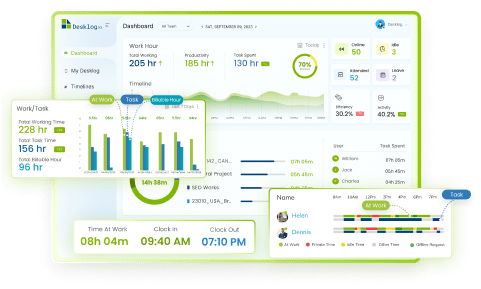
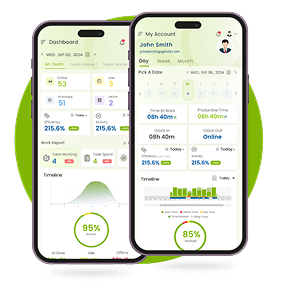
Desklog eliminates these challenges by replacing assumptions with real-time, automated data.
With Desklog, businesses can:
Track actual working hours automatically
No manual input required. Automated time tracking records time smoothly in the background, ensuring every minute is captured accurately.
Adapt to every work model
Whether it’s full-time, part-time, or shift-based teams, clock in & clock out ensures schedules are aligned with real working patterns.
Get real-time productivity insights
Features like employee insights help you understand exactly how time is spent across tasks and projects.
Ensure accurate payroll and billing
With automated timesheets, project time tracking and project billing, businesses can base payroll and invoicing on actual tracked hours.
Simplify leave and attendance tracking
Easily manage leave with an attendance tracking system that aligns perfectly with tracked work hours for better reporting.
Track work across any environment
Whether employees are remote or on the move, offline time tracking and geo tracking ensure no work time is missed.
Conclusion
The standard “260 working days” is only a rough estimate and often inaccurate for real-world business scenarios.
Factors like holidays, work schedules, and regional differences significantly impact the actual number of working days.
Relying on fixed assumptions can lead to errors in payroll, leave, and project planning.
Using time tracking software like Desklog helps replace estimates with real-time data, ensuring greater accuracy and efficiency across your operations.
FAQ
1How many working days are there in a year?
2What is the formula to calculate working days in a year?
3Why do working days vary by country?
4How do public holidays affect working days?
5How do you calculate working days for payroll?
6How many working days does a part-time employee have?
7How do shift workers impact working day calculations?
8What is the best way to track working days accurately?
Meet The Author

Product Specialist & Research Head
