




Which is the Best Software for Managing OKRs and Performance in 2026?



Organizations today need to align team efforts with business goals, and Objectives and Key Results (OKRs) help achieve this. However, successful OKR implementation requires tools that can track progress, monitor productivity, and measure performance.
OKR management and performance management software provide the visibility needed to manage goals effectively. Tools like time tracking software offer real-time insights into work hours, productivity, and project progress, helping organizations improve performance and goal alignment.
We will look at:
Let’s take a look!
What is OKR and Performance Management Software?
OKR management software is designed to help organizations set, track, and measure goals across teams and departments. When combined with performance management software, businesses gain better visibility into how employee activities contribute to company objectives.
An effective OKR tracking tool typically helps organizations:
- Set clear objectives and measurable key results
- Align employee tasks with company-wide goals
- Track employee productivity and performance in real time
- Identify performance gaps and improvement opportunities
- Improve transparency and accountability across teams
By using OKR and performance management software, businesses can shift from task-based work to results-driven performance management, ensuring that every team member contributes to measurable outcomes.
Why Businesses Need OKR and Performance Management Tools
As organizations grow, managing goals and tracking employee performance becomes increasingly complex. Many companies still rely on spreadsheets or manual tracking, which often lead to inaccuracies, limited visibility, and inefficient workflows.
Without dedicated performance management tools, businesses face several challenges.
Lack of Visibility Into Team Productivity
Managers often struggle to understand how employees spend their time and whether their work aligns with organizational goals.
Manual Tracking of Tasks and Work Hours
Tracking employee work hours manually increases administrative work and can lead to errors in reporting and payroll calculations.
Difficulty Measuring Progress Against Goals
Without proper OKR tracking software, organizations may find it difficult to measure progress toward key results and evaluate whether objectives are being achieved.
Limited Visibility Into Remote Teams
With remote and hybrid work becoming more common, businesses need tools that provide visibility into distributed teams and their productivity levels.
Inefficient Reporting and Analysis
Manual reporting makes it harder to generate meaningful insights that can guide strategic decision-making.
Using modern OKR management software and employee productivity tools helps organizations overcome these challenges by providing automation, analytics, and real-time performance insights.
Key Features to Look for in OKR and Performance Software
Choosing the right performance management software is essential for ensuring successful OKR implementation. Organizations should look for tools that combine goal tracking with workforce productivity insights.
Here are some key features that the best OKR software solutions should offer.
Goal Tracking
An effective OKR management platform should allow organizations to define objectives and track key results across departments. This helps ensure that every team member understands how their work contributes to larger organizational goals.
Performance Analytics
Performance analytics provide valuable insights into employee productivity, task completion rates, and overall team efficiency. These insights help managers identify strengths, weaknesses, and opportunities for improvement.
Automated Reporting
Automated reporting eliminates manual data collection and provides accurate performance reports that help organizations monitor progress toward OKRs.
Time and Activity Tracking
Understanding how employees spend their time is essential for measuring productivity. Time tracking software helps organizations identify work patterns and optimize workflows.
Team Collaboration
Collaboration features help teams stay aligned with shared objectives, making it easier to achieve organizational goals.
When all these features are combined, businesses can effectively manage both goal tracking and performance management in one integrated system.
Desklog: A Powerful Tool for OKR and Performance Management
Among the many tools available today, Desklog stands out as a comprehensive solution for managing workforce productivity and performance.
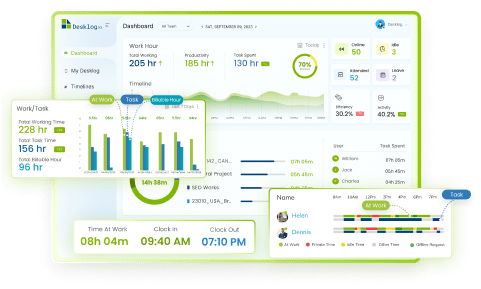
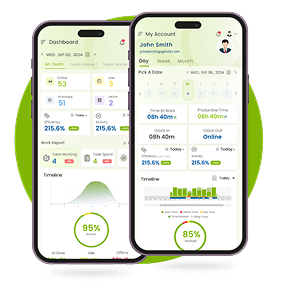
Desklog is designed to provide organizations with detailed insights into employee work patterns, project progress, and productivity levels through automated tracking and intelligent reporting.
By combining time tracking, project monitoring, productivity analytics, and workforce reporting, Desklog helps organizations manage employee performance while supporting OKR-based goal management strategies.
Key Features of Desklog for OKR and Performance Management
1. Automated Time Tracking
One of the most important features of Desklog is its automated time tracking capability.
Desklog automatically records the time employees spend on different tasks and projects without requiring manual input. This ensures that organizations receive accurate productivity data while reducing administrative work.
Automated time tracking helps organizations:

This feature makes Desklog a valuable tool for organizations looking to improve workforce efficiency and performance tracking.
2. Project and Task Tracking
Effective OKR implementation requires visibility into project progress and task completion. Desklog provides powerful project and task tracking features that allow managers to track work in real time.
Key capabilities include:
These features help organizations measure progress against deadlines and key results, ensuring that teams remain aligned with company objectives.
3. Automated Timesheets
Desklog simplifies workforce management with automated timesheets generated directly from real tracking data.
Instead of manually recording work hours, the system automatically creates accurate timesheets based on employee activity.
This offers several benefits:
Automated timesheets provide organizations with a clear picture of employee productivity and time utilization.
4. Performance and Productivity Reports
One of the biggest advantages of Desklog performance tracking software is its advanced reporting system.
Desklog generates detailed reports that provide performance insights into workforce productivity and project progress.
Examples include:
These reports allow managers to make data-driven decisions that improve team performance and resource allocation.
5. Project Profit and Cost Analysis
Desklog supports project profitability analysis by tracking time spent on tasks and projects to calculate costs and resource utilization. It also includes built-in project billing and profit & loss calculators, helping businesses generate accurate billing data and evaluate project financial performance.
This allows organizations to:
These capabilities make Desklog not just a productivity tool but also a useful platform for financial and strategic decision-making.
How Desklog Helps Organizations Achieve OKRs
Implementing OKRs successfully requires continuous monitoring and performance evaluation. Desklog supports OKR frameworks by providing accurate productivity insights and performance data.
Organizations using Desklog can:
By connecting daily work activities with measurable results, Desklog helps organizations turn strategic objectives into achievable outcomes.
Achieve Your Business Goals with Better Performance Tracking
Track productivity, monitor progress, and align your team goals with real-time insights using Desklog.
Try Your Free Demo TodayConclusion
Managing OKRs and employee performance requires more than just goal setting. Organizations need the right OKR management software and performance tracking tools to provide visibility, accountability, and actionable insights.
Desklog employee time tracking software offers a complete solution for organizations looking to improve productivity, track employee performance, and align team efforts with business goals.
For companies seeking reliable OKR tracking tools and employee productivity software, Desklog provides the insights and automation needed to turn goals into measurable success.
FAQs
Meet The Author

CEO and Product Innovation Manager at Desklog.io
