




Team Collaboration Tools for Small Businesses and Growing Teams



As small businesses grow, collaboration becomes harder to manage and more critical to get right. What once worked through quick chats and informal updates quickly turns into missed messages, unclear ownership, duplicated work and constant follow-ups, especially in remote and hybrid teams.
This is why modern team collaboration tools are no longer optional for growing organisations. In this guide, you will learn what collaboration software really means today, how online collaboration tools and workforce-intelligent time tracking software support growing teams. We will have a detailed look into:
- Why Small Businesses Need Team Collaboration Tools to Scale
- What Are Team Collaboration Tools and How Do They Work?
- Collaboration Tools, Communication Apps and Project Management Tools – What Is the Difference?
- Why Remote Teams Depend on Collaboration Tools More Than Ever
- Key Features That Make Collaboration Tools Actually Useful
- Best Team Collaboration Tools for Small Businesses
- How the Right Collaboration Tools Improve Team Productivity
- How to Choose the Right Team Collaboration Tools for Your Business
- Common Mistakes Small Businesses Make When Choosing Collaboration Tools
Let’s go!
Quick Answer – What Are Team Collaboration Tools?
Team collaboration tools are digital platforms that help teams communicate, manage tasks, share files and track work in one centralized workspace. These tools improve visibility, accountability and teamwork by eliminating scattered communication and disconnected workflows, especially for remote and fast-growing teams.
Why Small Businesses Need Team Collaboration Tools to Scale
When a team grows from five people to twenty or fifty, coordination becomes a business risk if the right systems are not in place.
Without proper workplace collaboration tools, teams often experience:
- unclear ownership of tasks
- constant status meetings
- information buried in chat threads
- multiple versions of documents
- managers chasing updates instead of enabling progress
Modern digital collaboration tools are not about controlling employees. They are about making teamwork easier as complexity increases
What Are Team Collaboration Tools and How Do They Work?
Many teams still associate collaboration software only with chat apps. In reality, modern collaboration platforms go far beyond messaging.
Collaboration software helps teams:
- communicate in real time and asynchronously
- organize and assign work
- collaborate on documents and files
- track progress and outcomes
- connect multiple business tools into one workflow
In practice, this means a team can plan projects, assign tasks, discuss decisions, share documents, and review progress from the same digital workspace.
Collaboration Tools, Communication Apps and Project Management Tools – What Is The Difference?
Understanding this difference between collaboration tools, communication apps and project management tools helps avoid tool overload.
| Tool type | Primary purpose | What they are best at | Typical examples | When they work best |
|---|---|---|---|---|
| Communication apps | Enable fast and simple team conversations | Real-time messaging, quick updates, group chats and informal | Slack, Microsoft Teams (chat) | When teams mainly need quick coordination and ongoing |
| Project management tools | Plan, organize and deliver work | Task management, timelines, dependencies, milestones and delivery tracking | ClickUp, Asana, Trello | When teams need structured planning and clear delivery control |
| Team collaboration tools | Bring communication and execution together in one workspace | Connected conversations, task ownership, document collaboration and progress visibility | Microsoft Teams (full workspace), Notion, ClickUp, Desklog | When teams want a single platform to communicate, execute work and track outcomes together |
Today, most effective collaboration software blends elements of all three, allowing teams to communicate, execute and track work from the same platform.
Why Remote Teams Depend on Collaboration Tools More Than Ever
Remote work has fundamentally changed how teams operate. Without physical visibility and in-person interactions, teams need stronger digital systems to stay aligned, productive and connected.
This is why modern remote team collaboration tools are no longer optional for distributed and hybrid teams.
Why modern teams can’t collaborate effectively without the right tools
Remote and hybrid teams face unique challenges that traditional ways of working cannot support.
The most common challenges include:
- different time zones and working hours
- asynchronous work schedules
- limited informal and spontaneous communication
- lack of visibility into work progress and priorities
Without proper remote collaboration tools, teams compensate with frequent meetings and constant messaging. Over time, this creates employee burnout, communication overload and reduced focus.
Core collaboration needs for remote-first teams
To work effectively across locations, remote teams need collaboration platforms that support:
- asynchronous communication for flexible working hours
- task-based discussions instead of scattered chats
- shared documentation for easy knowledge access
- transparent priorities and ownership
- progress visibility without micromanagement
Strong remote team collaboration tools reduce the pressure to always be online and allow people to work when they are most productive.
How the right tools reduce miscommunication and burnout
When conversations are directly connected to tasks and projects, important context stays in one place and is never lost. Teams no longer need to repeat explanations across multiple apps or channels, which reduces confusion and unnecessary interruptions.
This leads to:
- fewer misunderstandings
- fewer follow-up messages
- less meeting fatigue
- more focused and uninterrupted work time
Well-designed collaboration software helps teams stay aligned and informed without increasing communication volume, making daily work calmer and more sustainable for growing and remote teams.
Key Features That Make Collaboration Tools Actually Useful
Before selecting any collaboration software, small businesses should focus on real business outcomes; not long feature lists. The best team collaboration tools remove everyday friction, improve clarity, and help teams move faster without adding extra administrative work.
In practice, the most useful team productivity tools include a small set of core capabilities that directly support daily work such as:
1. Team communication
Strong collaboration tools go beyond simple chat. They keep conversations connected to the actual work, so context is never lost and teams can follow decisions later. They offer:
- Real-time chat for quick coordination
- Asynchronous updates for flexible, time-zone friendly work
- Discussion threads linked directly to tasks and projects
With modern online collaboration tools, teams can communicate instantly when needed and still collaborate effectively across locations and schedules.
2. Task and project tracking
Task management is a core function of workplace collaboration tools. Without clear ownership and task prioritization, collaboration quickly turns into noise. It offers:
- Clearly assigned task owners and responsibilities
- Visible deadlines and priority levels
- Flexible project views (lists, boards, timelines) and workflows
Good collaboration software helps everyone understand who is responsible, what is due, and how work moves through each stage without constant status meetings.
3. File sharing and document collaboration
Modern teamwork depends on fast and reliable access to shared content, so teams can create, find, and update files in one place without delays or version confusion. This feature offers:
- Centralised shared documents and files
- Attachments linked directly to tasks and discussions
- Built-in version history and change tracking
The best digital collaboration tools keep documents inside the workspace so teams always work on the correct version and avoid searching across multiple systems.
4. Productivity visibility and reporting
Visibility should support better decisions by giving teams and managers a clear view of progress and workload without disrupting daily work. This helps with:
- Real-time progress and milestone tracking
- Workload and capacity insights across teams
- Activity and delivery summaries for managers
High-quality collaboration platforms help leaders spot bottlenecks, balance workloads and plan resources while staying focused on outcomes.
5. Integrations with existing tools
No collaboration platform works in isolation. Teams rely on multiple business systems to complete everyday work. Popular integrations include:
- Calendar and scheduling integrations
- Cloud storage connections
- Development, helpdesk, or CRM system integrations
The best online collaboration tools connect easily with the software teams already use, reducing duplicate work and keeping information in sync.
6. Security and access control
As collaboration software becomes a core business system, security is essential to protect sensitive data while supporting safe teamwork. This feature offers:
- Role-based access and permission controls
- Data protection and secure sharing
- Compliance and audit support
Reliable collaboration platforms protect sensitive information while still enabling smooth collaboration with internal and external users.
Best Team Collaboration Tools for Small Businesses
Different teams need different strengths from their collaboration platforms. Below is a short, practical overview of popular collaboration tools and where each one fits best.
1.Desklogfor visibility and accountability in growing teams
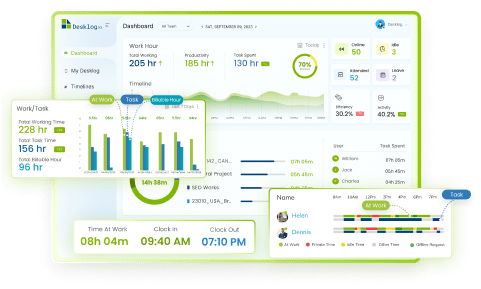
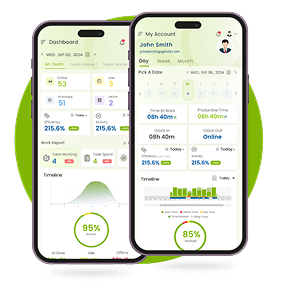
Desklog is a workforce-intelligent time tracking software that helps teams gain clear visibility into how work is performed by tracking tasks, time usage, and productivity trends. It offers actionable insights into team activity and performance, enabling managers to make data-driven decisions and improve operational efficiency.
2.SlackFor communication-first teams
Slack is built around real-time messaging and channels. It works best for teams that rely heavily on conversations, quick coordination and integrations with many external tools. It reduces internal emails but offers limited built-in project and task management.
3.Microsoft Teamsfor Microsoft ecosystem users
Microsoft Teams is ideal for businesses already using Microsoft 365. It combines chat, meetings, file sharing and document collaboration in one workspace, making it a natural choice for teams that work mainly inside Microsoft apps.
4.ClickUpfor task-heavy workflows
ClickUp is suited for teams that need structured project management. It focuses on tasks, workflows, priorities and dashboards, helping teams manage complex projects and keep discussions connected directly to work items.
5.Notionfor documentation and knowledge sharing
Notion is best for teams that need a central place for internal documentation, wikis and shared knowledge. It supports collaborative writing and simple task tracking but is mainly designed for content and knowledge management.
| Tool | Core features | Best use case | Key strengths | Limitations to consider | Pricing model (indicative) | Team size fit |
|---|---|---|---|---|---|---|
| Desklog | Task tracking, time and activity visibility, productivity reports, performance insights | Growing teams that need operational visibility and accountability | Clear productivity insights, real work visibility, supports data-driven management | Less focused on chat-centric collaboration | Free trial + per-user paid plans | Teams of all sizes |
| Slack | Team chat, channels, threads, file sharing, large app integrations | Communication-first teams and fast-moving startups | Excellent real-time communication, huge integration ecosystem, easy adoption | Limited built-in project and task management | Free plan + per-user paid plans | Small to large teams |
| Microsoft Teams | Chat, video meetings, file sharing, basic task tools, Microsoft 365 integration | Teams already using Microsoft 365 | Smooth Office apps integration, strong video meetings, enterprise security | Heavier interface for small teams, limited advanced workflow features | Free plan + per-user paid plans | Small to enterprise teams |
| ClickUp | Tasks, projects, workflows, dashboards, automation, docs | Task-heavy and process-driven teams | Very strong project management, highly customizable workflows | Can feel complex during onboarding | Free plan + tiered per-user paid plans | Small to mid-size teams |
| Notion | Documents, wikis, databases, light task tracking, collaboration | Documentation and knowledge-driven teams | Flexible content creation, great internal knowledge base, easy collaboration | Not designed for deep project or workload tracking | Free plan + per-user paid plans | Small to mid-size teams |
How the Right Collaboration Tools Improve Team Productivity
Productivity is not about working longer hours. It is about removing friction from everyday work.
The right team productivity tools support:
- Centralized Workflows
- Clear Priorities
- Transparent Ownership
- Reduced Context Switching
- Faster Feedback Loops
When collaboration platforms bring communication, tasks, and files together, teams spend less time coordinating and more time delivering outcomes.
Tools such as Desklog also help teams understand where time is actually spent, enabling data-driven improvements without disrupting daily work.
See How Desklog Improves Team Visibility and Productivity
Discover how workforce-intelligent time tracking software like Desklog helps your team gain real insight into work, performance and productivity.
Book Your Free Desklog DemoHow to Choose the Right Team Collaboration Tools for Your Business
A simple and practical decision framework can help small businesses avoid expensive mistakes and low adoption later.
Team size and growth plans
Choose team collaboration tools that can grow with your business without forcing major system changes. The right collaboration software should support more users, projects and teams easily, so you do not need to migrate platforms every time your organization expands.
Remote vs hybrid setup
Remote-first teams depend heavily on strong asynchronous communication and clear progress visibility. Hybrid teams, on the other hand, need collaboration platforms that keep in-office and remote employees equally informed through shared workspaces and consistent communication channels.
Scalability and onboarding
The best collaboration tools for teams are easy to learn and quick to adopt. Effective online collaboration tools allow new employees to become productive fast without long training programs or complex setup.
Compliance and security needs
As your business grows, digital collaboration tools must support role-based access, data protection and audit trails. Strong security ensures that sensitive business information remains protected while collaboration remains open and flexible.
Common Mistakes Small Businesses Make When Choosing Collaboration Tools
Many teams invest in powerful collaboration platforms that fail to deliver real results in daily operations.
Using multiple overlapping collaboration tools for teams creates fragmented communication and scattered information. This reduces adoption and slows execution.
Highly customized workflows and automation often increase maintenance and confusion. Simple and clear collaboration software is usually more effective than feature-heavy systems.
Even the best team productivity tools will fail if employees are not guided on how to use them properly. Short onboarding and clear usage guidelines are critical for success.
Small businesses should select collaboration tools for managers and employees based on real operational needs such as visibility, accountability and delivery rather than the number of features listed on a product page.
Conclusion
The best collaboration tools are not the ones with the most features.
They are the ones that help people work together more clearly, confidently and efficiently.
For small businesses and growing teams, the right mix of digital collaboration tools, communication systems, task ownership and visibility platforms can dramatically improve productivity without increasing pressure or micromanagement.
Start with tools that improve clarity, visibility and outcomes and scale your collaboration systems as your team grows.
FAQ
Meet The Author

Product Specialist & Research Head
